Yamin Tang from DADI360


Over the past year, I found myself moving from one ballroom to another. What began as a curiosity about the elderly dancers I kept encountering in unexpected corners of the city eventually unfolded into Huai Dan(s), the project Yichen and I have been developing under DADI360.
The ballrooms we observe are often established and maintained by senior residents of a specific community. They are typically composed of polished floors, spinning disco balls, colorful lights and sometimes even a statue of Guāngōng. They function as places for seniors to gather, build social connections, exercise, show affection, and of course, simply enjoy music and dance. And within the lively Chinese manyao rhythms that are often played here, you can almost sense an undercurrent of something else — emotions that sit quietly along the edges.
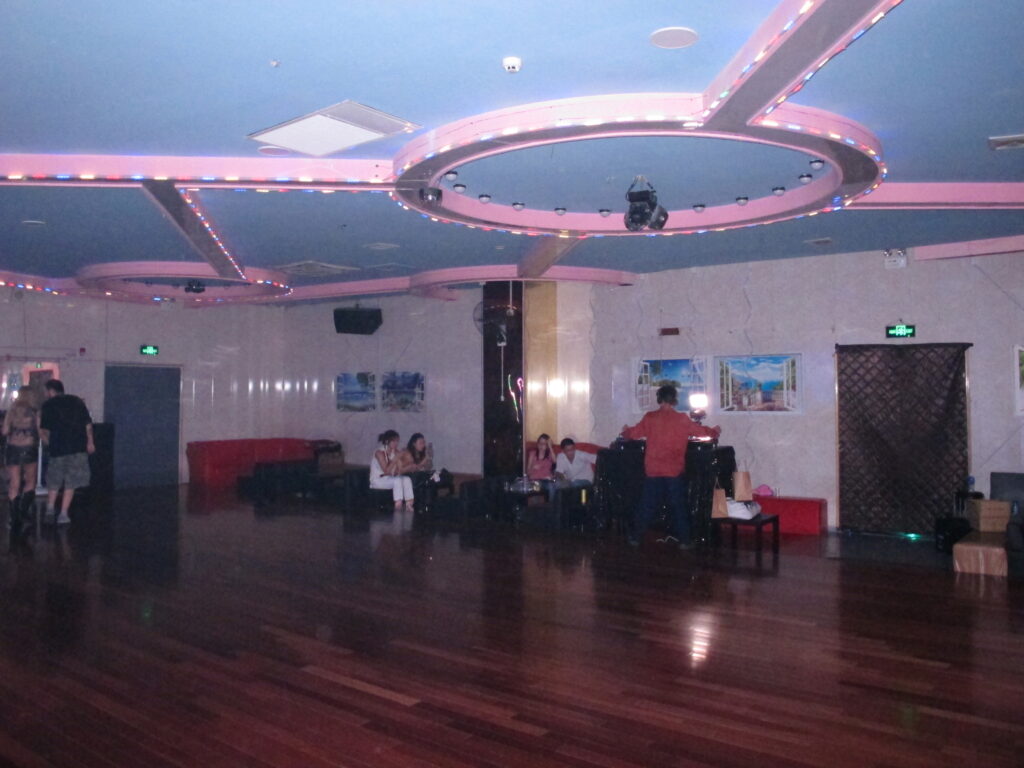
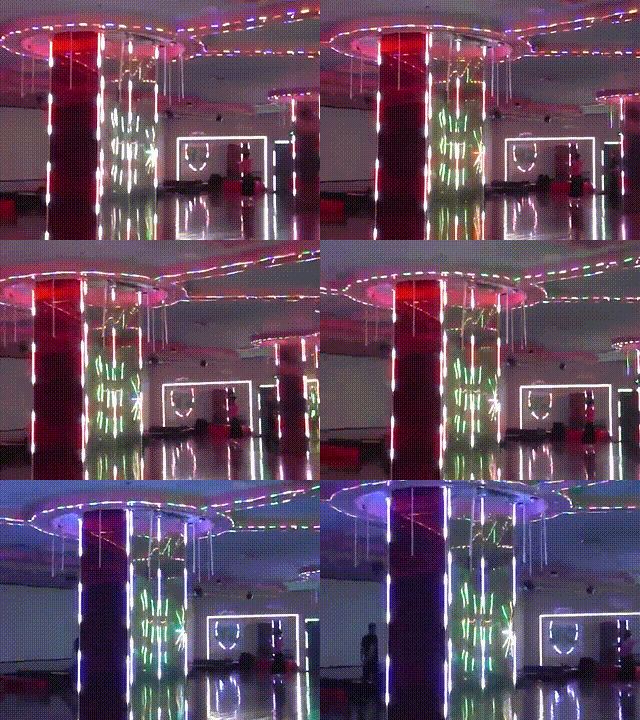
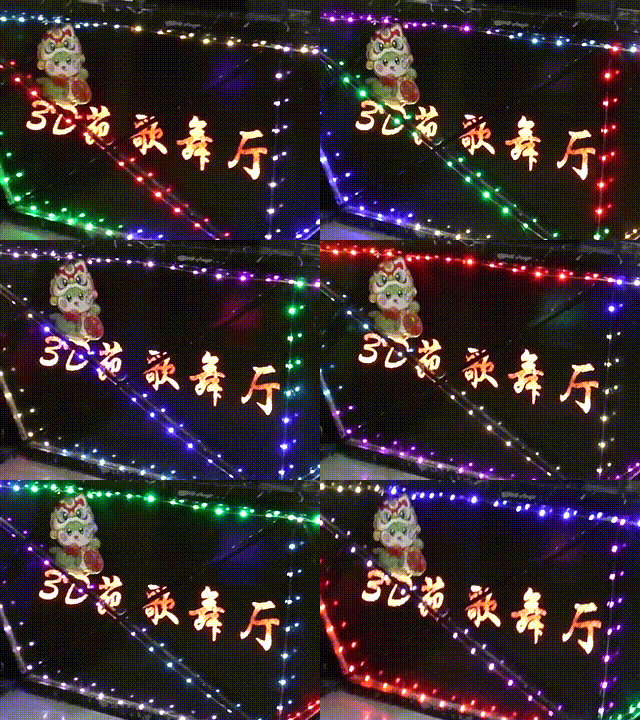
3D Yuan Ballroom, Shanghai
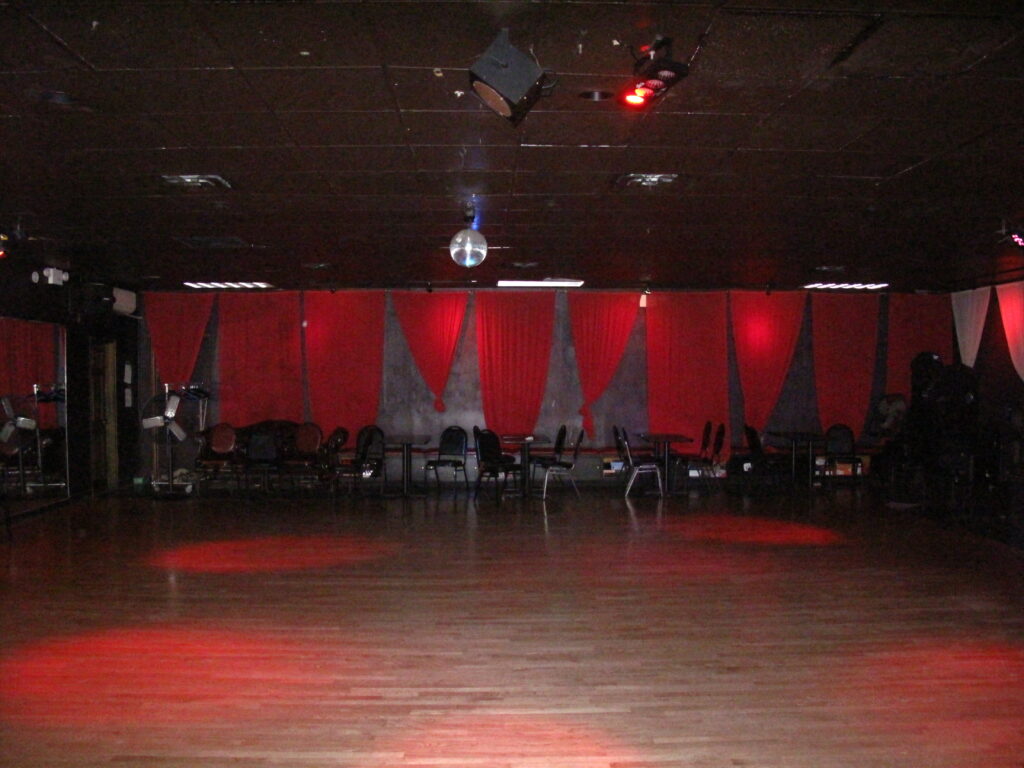
Imperial Ballroom, NYC Chinatown
Based on these insights, we initiated our project: bringing new dance music into the mix along with the old, letting the dance floor shake to both at once. We wanted young dancers and the ballroom’s original regulars to move together within the same emotion and atmosphere.
In August of last year, we found our first ballroom in Baoshan, a suburban area of Shanghai. 3D Yuan Ballroom, tucked away on the second floor of a shopping mall. Half of it is a KTV and the other half is a dance floor. Sometimes you can catch a glimpse of the female staff in their break room, smoking and playing mahjong around two mahjong machines. The dance floor has a massive spring-loaded surface, and according to the owner, who always tucks a leather bag under his arm and smokes Zhonghua cigarettes, he spent a hundred thousand RMB building it (though we’re not sure how true that is).
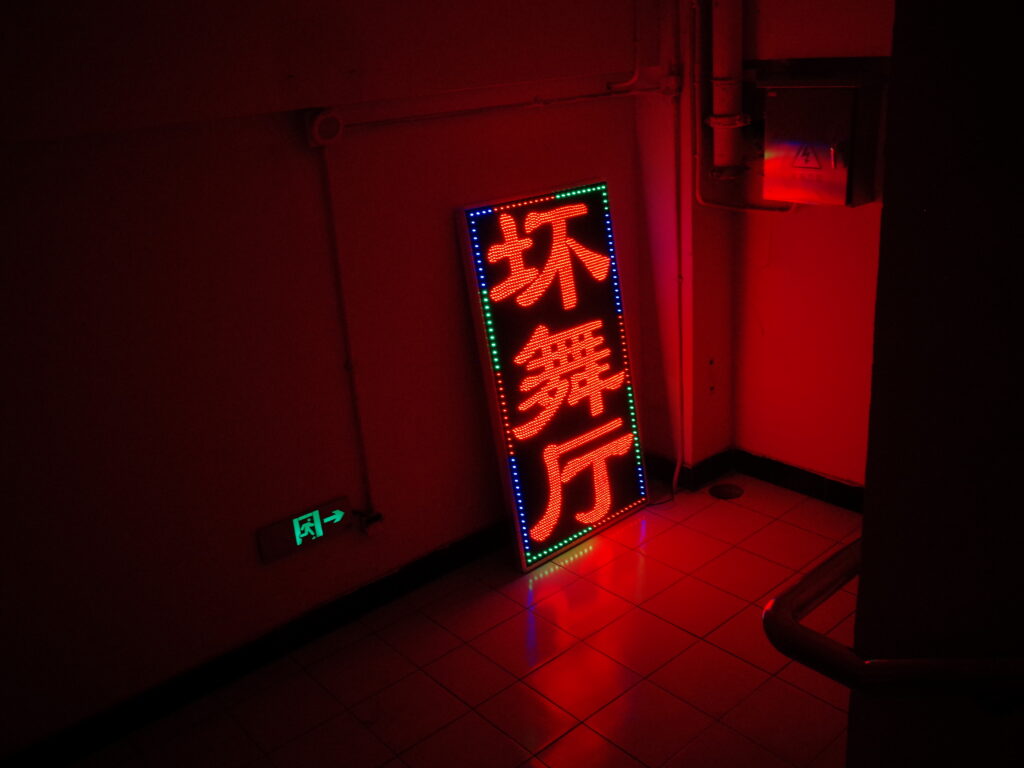
Lightbox for Huai Dan(s)
Before throwing our event, we visited the ballroom several times to test the sound. Each time we needed to check their in-house speakers, the uncle in charge would play Jingcai 精彩 by Jin Biao — a track included among the popular songs of the 2008 Beijing Olympics. Its melody is irresistibly catchy, and it left a deep impression on me. The song is categorized as Eurodance, much like the early electronic dance tracks that first circulated in China, such as 荷东 Hedong and 猛士 Mengshi. Perhaps these sounds left a lasting imprint on what the older generation remembers as “dance music.”
That party night when Huai Dan(s) launched, we took over the 3D Yuan Ballroom and played a mix of C-pop edits and diverse new Asian dance tracks. Our audience loved the spring floor. If someone next to you started dancing to the beat, you couldn’t help but move with them — because the floor would literally bounce you upward. Many middle-aged and elderly people who were hanging out in the nearby KTV rooms heard the noise and came over out of curiosity. A few of them eventually joined the dance floor. At the edge of the dance floor, we found a pair of polka dot cloth shoes, left behind by a random aunty.
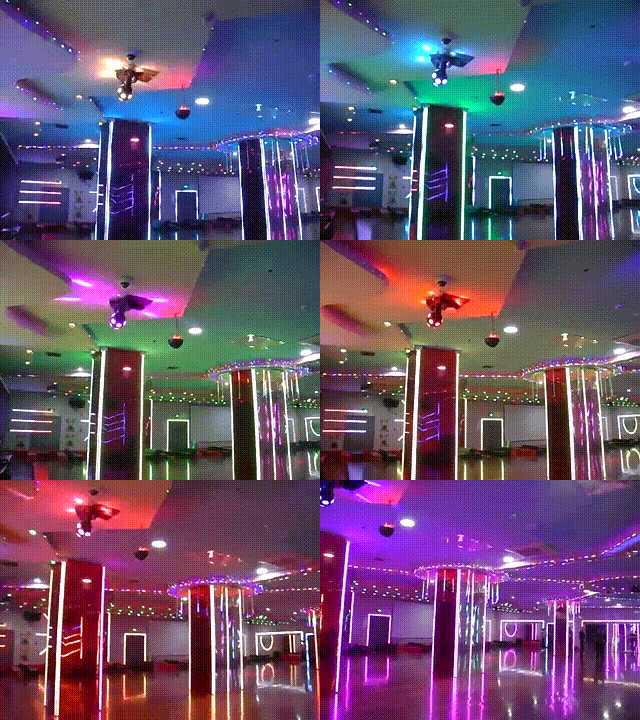
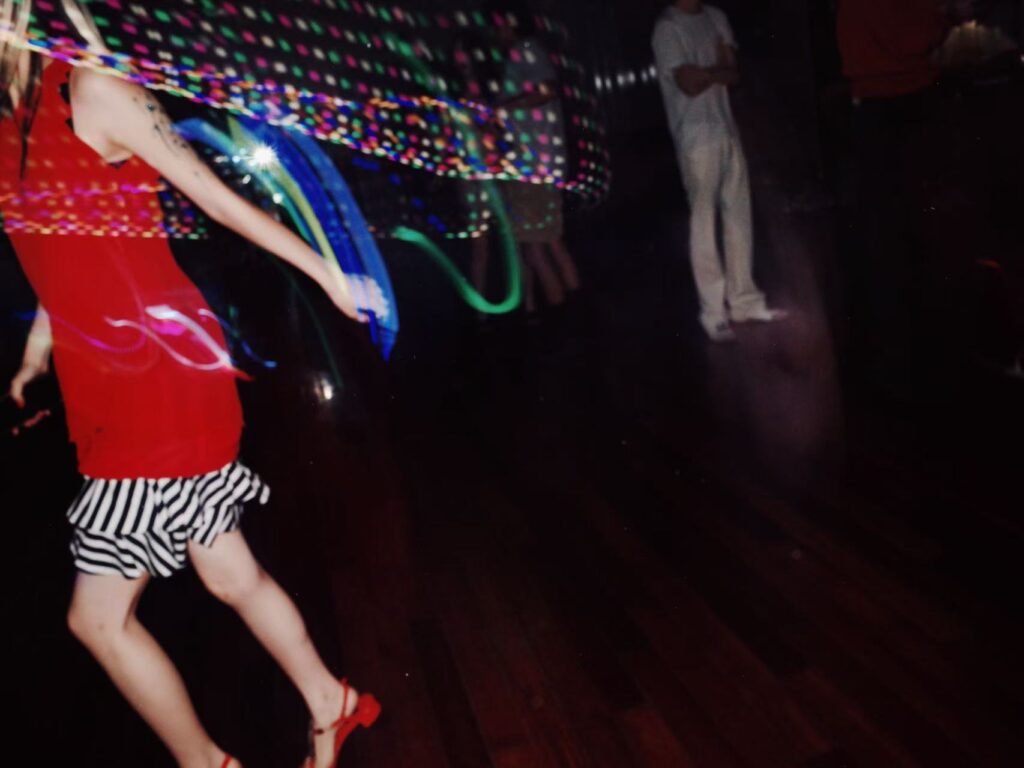
Huai Dan(s) at 3D Yuan Ballroom, Shanghai
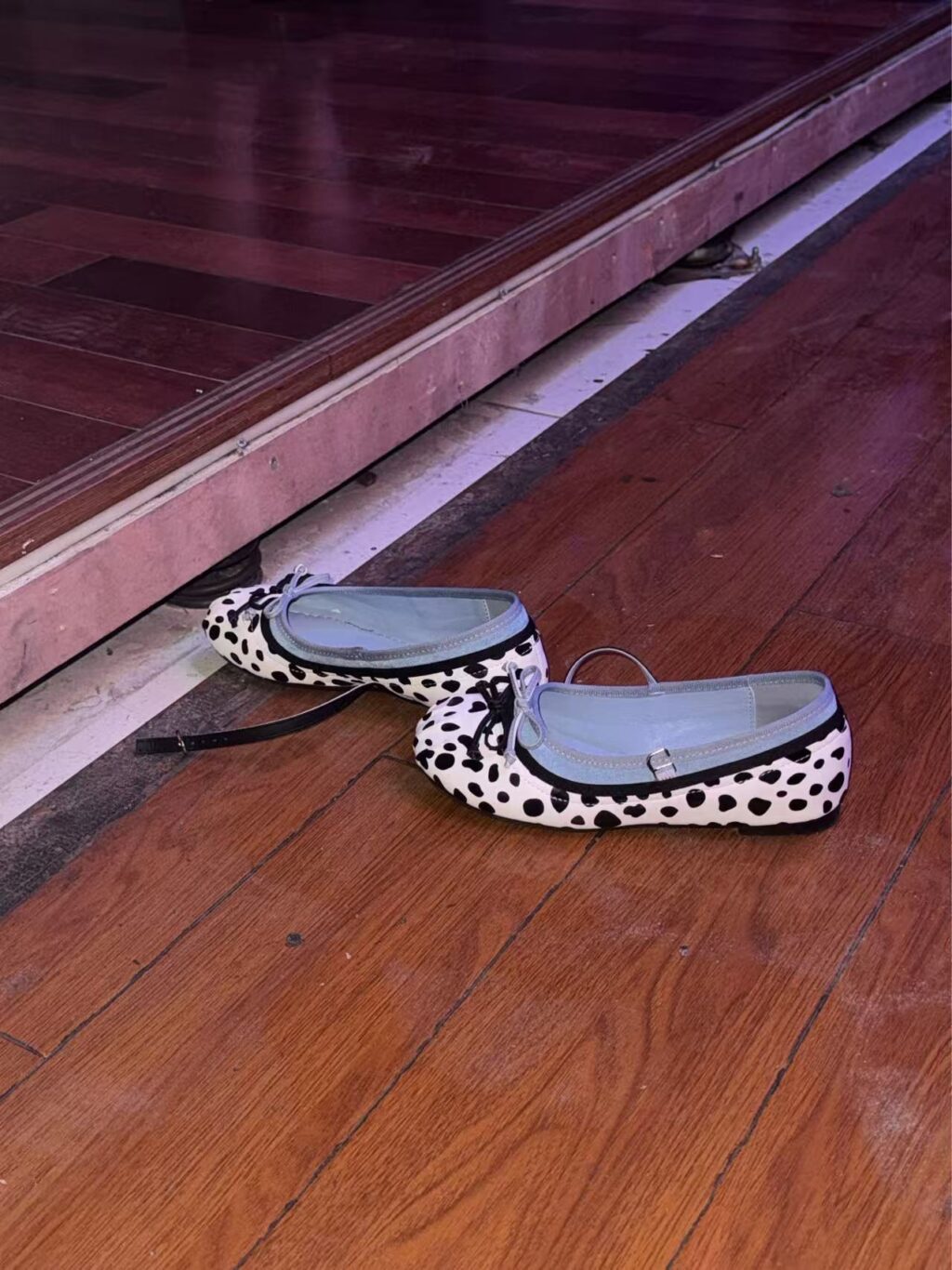
Polkadot shoes left behind by an aunty at Huai Dan(s) Shanghai
In November, we brought Huai Dan(s) to New York. Imperial Ballroom is an old dance hall we stumbled upon on the edge of Manhattan’s Chinatown. It was opened 30 years ago by a middle-aged Chinese couple originally from Malaysia and Vietnam. They are both dancers, and they met in a ballroom in Flushing back in the day. Over the past three decades, they have cared for this place with extraordinary devotion.
From the moment the ballroom opens in the morning until around 11 AM, the space belongs to the seniors. Irene, the owner, picks one USB loaded with dance tracks from their collection and inserts it into the sound system to set the playlist for the day. Most of the time, the uncles and aunties pair up and dance ballroom routines. Sometimes there is a “Fuzhou dance” phase, the music becomes more upbeat, and the aunties line up in front of the mirrors, moving in sync, stepping forward and back. For the rest of the afternoon, several Ukrainian dance instructors and their students come in one after another to rehearse.
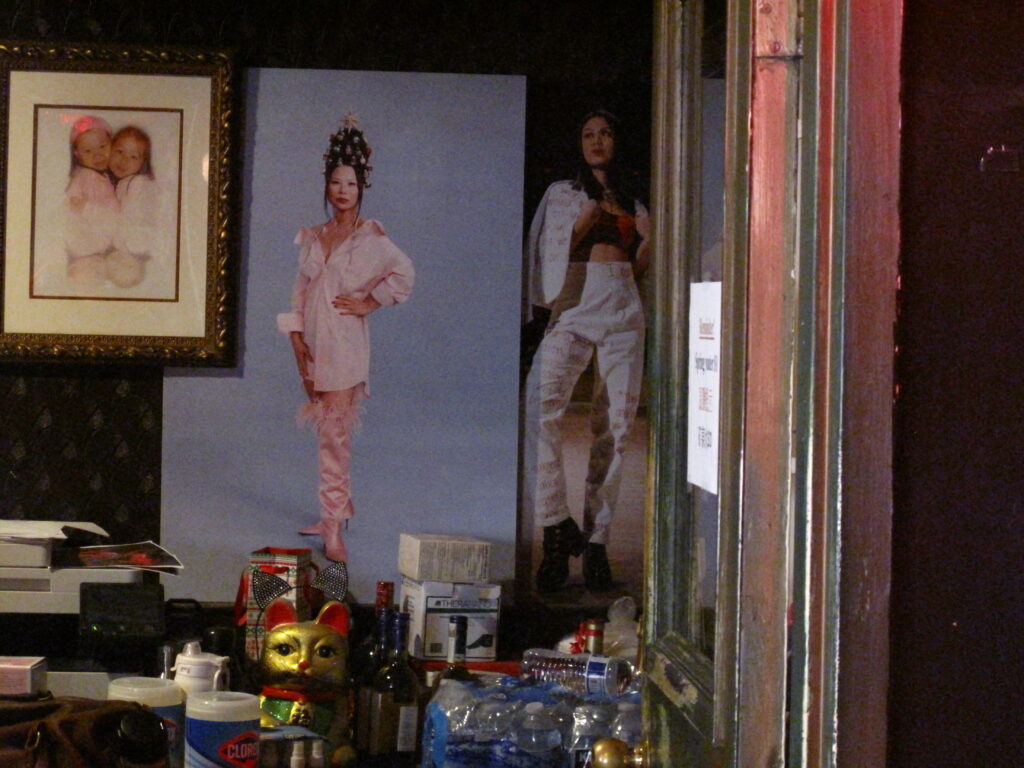
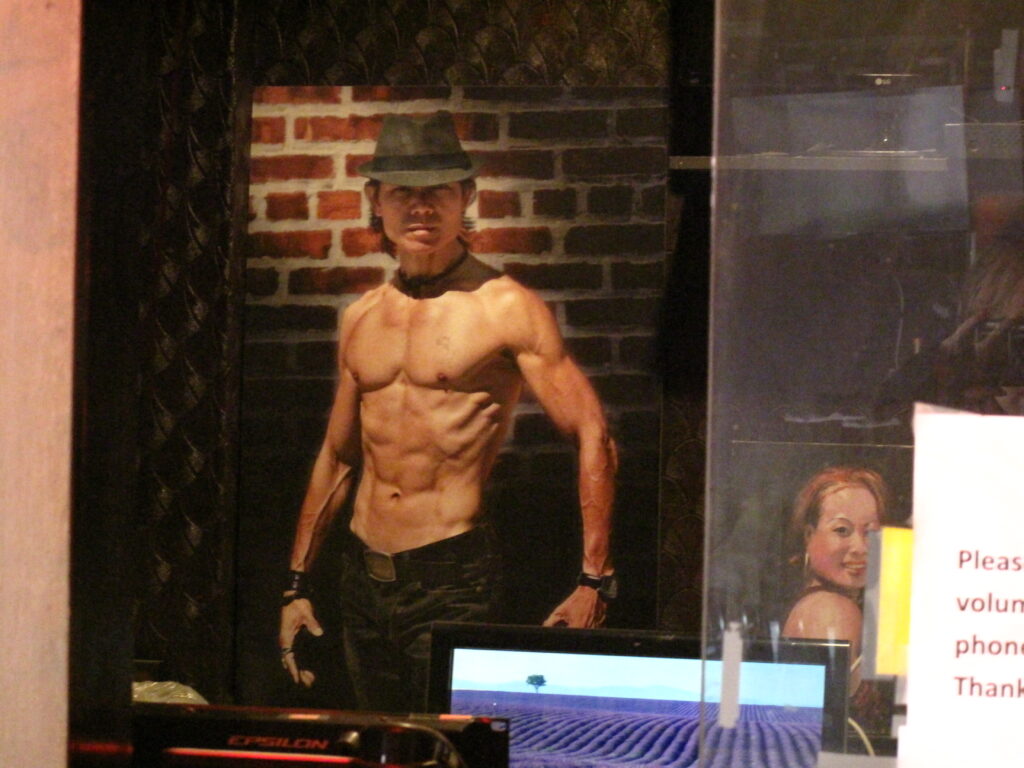
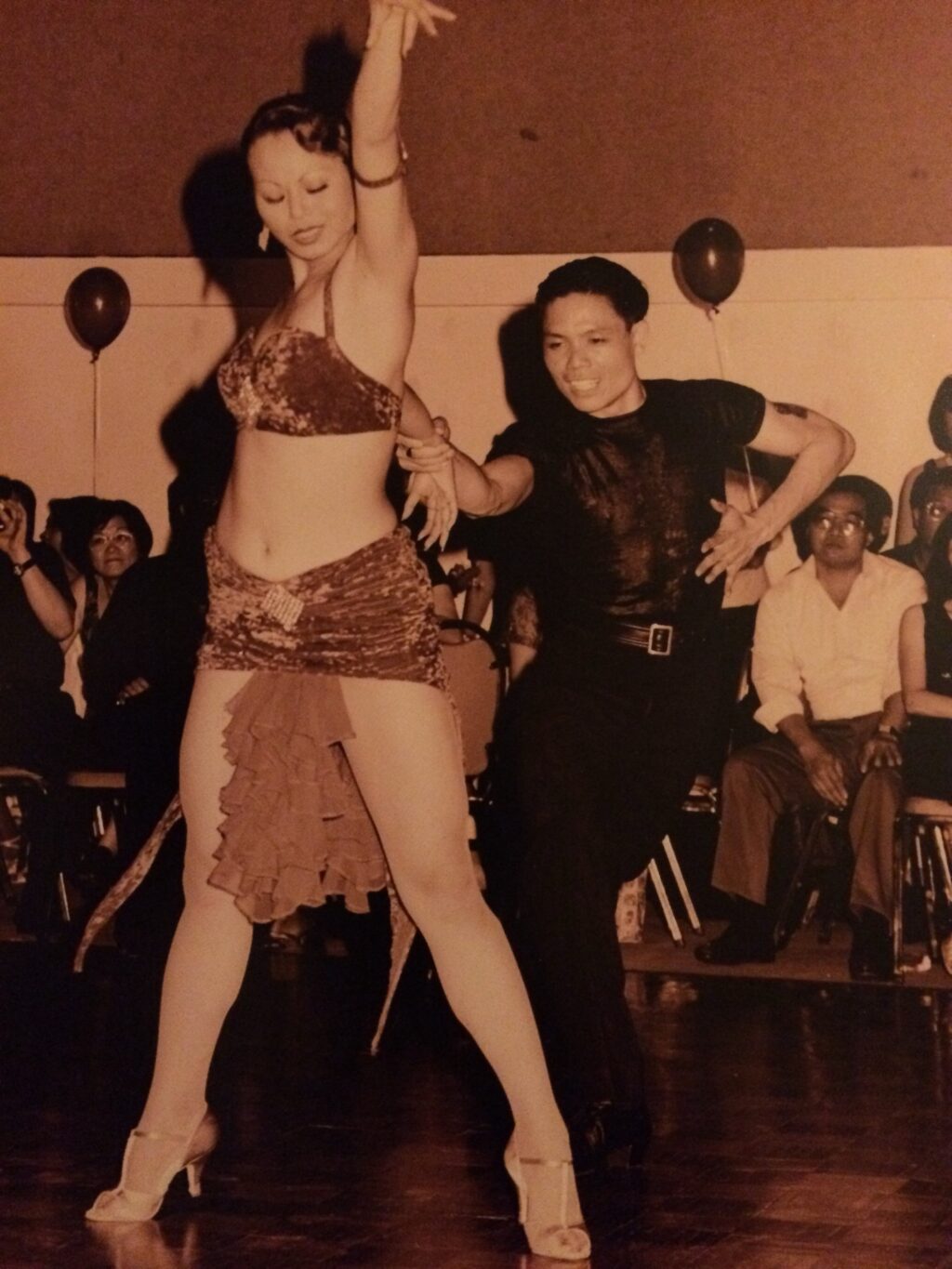
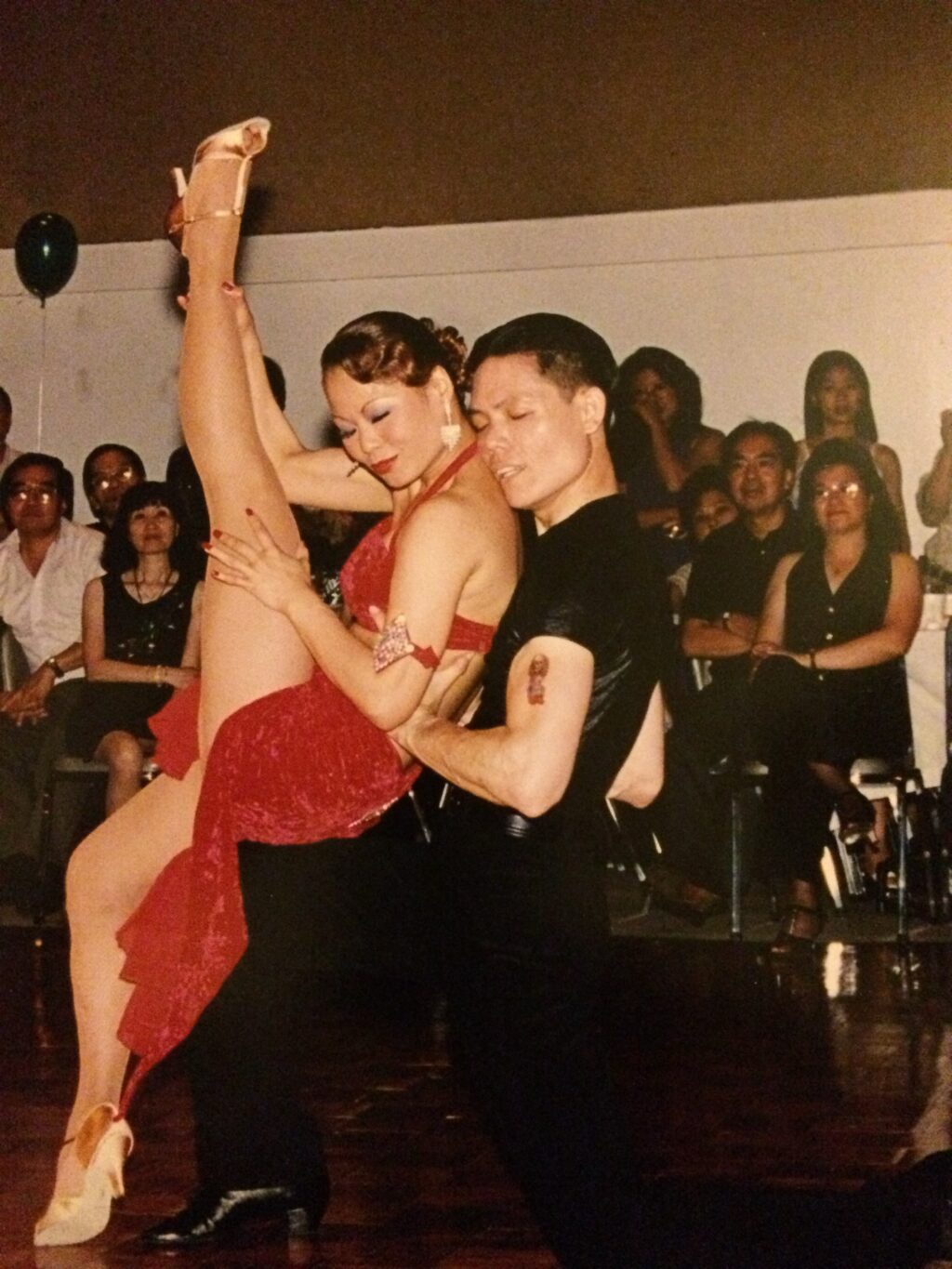
All around the ballroom, you can see photos of the two owners from past dancing competitions or artistic portrait shoots hanging around. They proudly display their golden years to everyone who comes through the space. Sadly, due to some post-COVID health issues, Ming, the husband, has developed lung problems. He no longer dances, but he still watches the kids closely as they practice. They said that over the past 30 years, they’ve taught countless students, and now feel like it’s time for this passion to be passed on.
It seems that the owners of every ballroom have a special attachment to their dance floors, and the one at Imperial Ballroom is clearly no exception. On the wall, you can find a notice asking dancers not to use baby powder as a substitute for proper dance shoes. It reads: “If you want to glide on the floor, what you need is a pair of dance shoes.”
Photographs of Irene and Ming, displayed on the walls of the ballroom.
When we tested the in-house speakers at Imperial Ballroom, the song that the owners chose to play was also worth noting: Tian Mi Mi 甜蜜蜜, a tune familiar to Chinese communities all over the world. Yet hearing it here felt entirely different from my childhood in Shanghai, where I heard it on car radios or as my mother’s phone ringtone. In this New York setting, for reasons I couldn’t quite name, the melody carried a quiet sorrow, perhaps for a past that had been left behind, or perhaps for a homeland left far away. Perhaps the song also carries memories from the couple’s own youth. We can’t really know. At least we know it is a sweet and soft melody capable of holding many different emotions and memories.
These ballrooms within diasporic Chinese communities somehow carry a more complex cultural role than the senior dance halls in China. Beyond the striking elegance of ballroom dance, what captures our attention most are the elderly Chinese dancers moving to manyao tracks. What makes them, after crossing oceans, still choose this particular way of finding connection within their community? The answers may lie in those dated, yet emotional, lyrics.
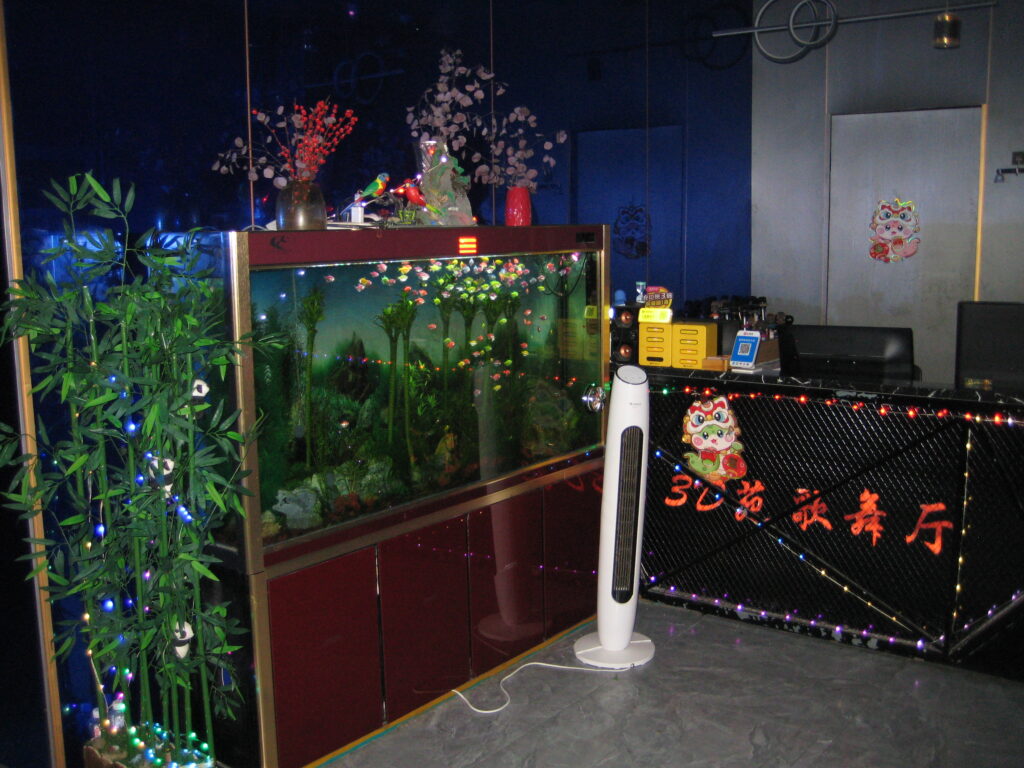
3D Yuan Ballroom, Shanghai
Whether it is this ballroom tucked in a third floor in Manhattan’s Chinatown or a secret underground ballroom in Flushing, you’ll always find familiar faces on the same dance floor during operating hours each day. They rarely talk much with the other dancers, pairing up when invited, swirling around the floor alone when they don’t have a partner, or simply waving their arms as a warm up. When you strike up a conversation, they can tell you exactly how many years they’ve been in this country. As for where they came from, why they came, or how they arrived? Those stories tend to dissolve into the music. The elderly dancers here seem far more silent than their counterparts in China.
Imperial Ballroom, wrapped in deep red satin curtains, added a layer of dreaminess to our party that night. Among the lineup, there was a DJ who runs a record shop in Chinatown filled with Asian rare grooves; a Black and Asian duo delivering explosive, interwoven cross-cultural beats; and a Taiwanese DJ devoted to Southeast Asian electronic music. There were also several new-generation Chinese independent artists, drifting through New York, each creating their own musical practice grounded in their cultural roots. You could almost pick out traces of jungle or Eurodance, but between the waves of samples and catchy lyrics, the sound became impossible to pin down, turning into something entirely new. The owner of the ballroom stood at the side, unable to resist swaying along.
The way the music of a party, the artists involved, and the space where it happens weave together often falls beyond explanation. Music speaks for itself. What is certain is that the ballroom is a shared entry point into music for both the older generation of immigrants and for us. We don’t want to take over a space with a lump sum of rental money, the way raves often do, and force ourselves into an unfamiliar venue. Instead, we hope to find a tiny point of common ground to let music and bodies form a deeper conversation with the space, and to see what new possibilities might emerge from that encounter. Huai Dan(s) will continue traveling to more places, expanding the edges of the dance floor, and allowing people to dance to music that belongs to them.
Yamin Tang