Ariana King


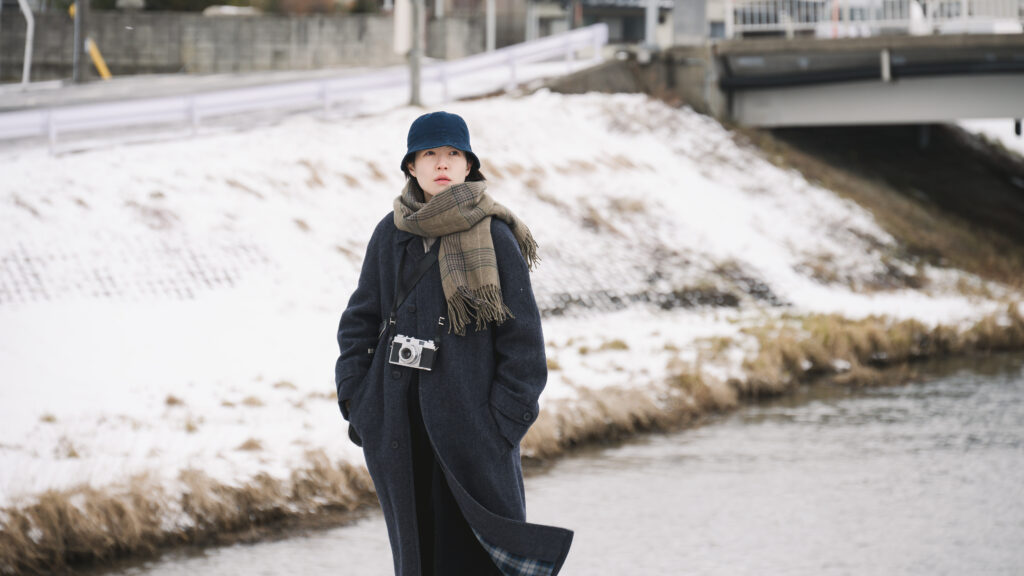
Sho Miyake describes his latest movie, Two Seasons, Two Strangers, as an attempt to film the wind.
三宅唱は最新作『二つの季節、二人の他者(Two Seasons, Two Strangers)』を、「風を撮ること」がテーマだと語る。
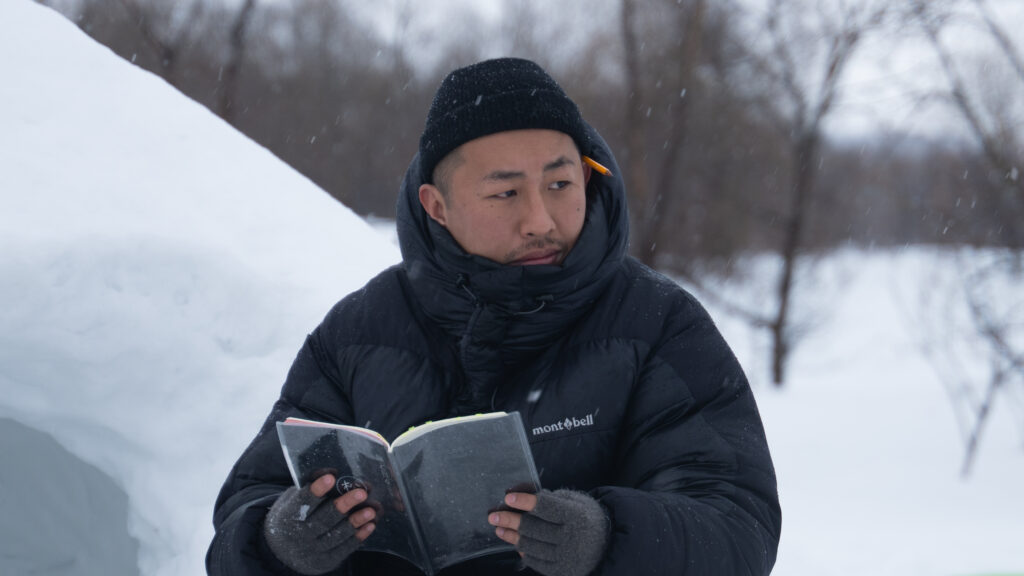
Director Sho Miyake
The film’s English title Two Seasons, Two Strangers is pleasantly straightforward. It prepares viewers to understand the movie as a diptych. Its Japanese title,『旅と日々』, or “Journey and Days,” perhaps better represents Miyake’s broadly interpretable work, and his intent to capture something as nebulous as the wind.
The narrative of Two Seasons, Two Strangers is split into two story arcs with two casts of two characters each, interacting across two different seasons: summer and winter. But viewing the film as two halves fails to acknowledge the surreal and distinctive hinge at its center — a brief interlude about twins and the disorientation that accompanies a disconnect between seeing and knowing — and its compelling frame as a movie about writing a movie.
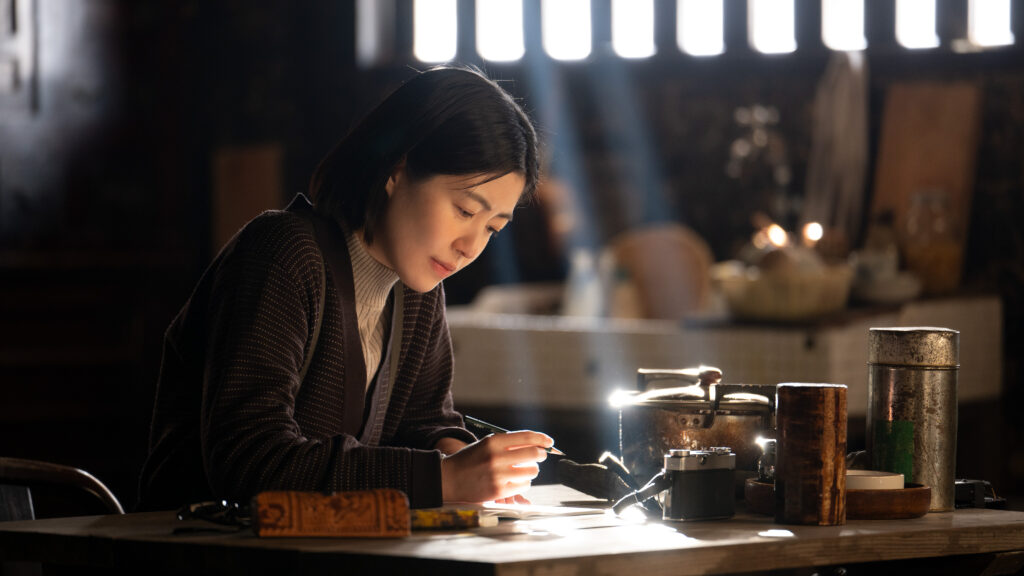
In the film’s opening scene, Li, a Korean screenwriter working in Japan (played by Shim Eun-kyung), is busy at her desk writing the script that becomes the film-within-a-film that follows — a boy-meets-girl tale set during a summer at a far-away seaside. This meeting of strangers is not a love story, but it is romantic nonetheless — blue and lonely yet charged with the thrill of meaningful connection in an unexpected place.
At a moment of ambiguity when our couple is being swallowed up by the ocean, the camera pans out. A panel of discussants is seated in front of the screen showing the film we’ve just watched. Li is accompanied by the director who filmed her screenplay (not Miyake) and describes her apprehension at writing the screenplay in question, an adaptation of A View of the Seaside — one of the two manga by Yoshiharu Tsuge that Miyake himself adapted to make Two Seasons, Two Strangers.
Given their shared motive as screenwriters, it’s difficult not to project Miyake onto Li, and to even see the film as a meditation on the process of making a film. The film’s snow-filled second half offers insight into Li’s personal life and experiences: the stuff that inspires her to write. But Miyake denies that Li is a surrogate for himself. Sometimes the similarity between truth and imagination is purely coincidence.
Winner of the 2025 Golden Leopard — the Locarno Film Festival’s top prize — Two Seasons, Two Strangers has been widely lauded for its portrayal of loneliness and human connection. In the following conversation with FAR—NEAR, director Miyake discusses the blurry line between reality and fiction.
『二つの季節、二人の他者』というタイトルは分かりやすく、本作を二部構成の作品として理解するための準備を観客に促す。一方で、原題の『旅と日々』は、三宅の解釈の幅を広く残した作品性や、風のように捉えがたいものを捉えようとする意図を、より的確に表しているのかもしれない。
本作の物語は、夏と冬という二つの季節をまたぎながら、それぞれ二人ずつの登場人物による二つの物語に分かれて展開する。しかし、本作を単純に二つのパートに分けて捉えるだけでは、その中央に置かれたシュールで独特な“蝶番”の存在を見落としてしまう。それは、双子をめぐる短い間奏であり、「見ること」と「知ること」の乖離がもたらす感覚の揺らぎを描くと同時に、本作を「映画を作ることについての映画」として縁取る重要な要素でもある。
冒頭のシーンでは、日本で活動する韓国人脚本家のリ(シム・ウンギョン)が机に向かい、この後に展開される“映画の中の映画”の脚本を書いている。そこでは、遠く離れた海辺の夏を舞台にした、いわゆるボーイ・ミーツ・ガールの物語が描かれる。この異邦人同士の出会いは恋愛物語ではないが、それでもなおロマンティックであり、青く孤独でありながら、思いがけない場所で生まれる意味あるつながりの高揚に満ちている。
やがて、二人が海に飲み込まれそうになる曖昧な瞬間に、カメラは引いていく。すると、先ほどまで観ていた映画を上映するスクリーンの前に、複数の登壇者が座っていることが明らかになる。リは、自身の脚本を映画化した監督(三宅ではない)と並び、この脚本――三宅自身も本作で翻案したつげ義春の漫画『海辺の叙景』を原作とする――を書くことへの不安を語る。
同じ脚本家としての動機を共有するリの存在に、三宅自身を重ねてしまうのは自然なことだろう。本作そのものを、映画制作という営みについての思索として読むことすらできる。雪に覆われた後半では、リの私生活や経験――すなわち彼女の創作の源泉――が描かれる。しかし三宅は、リが自身の分身であることを否定する。真実と想像が似通って見えるのは、単なる偶然であることもあるのだ。
第78回ロカルノ国際映画祭で最高賞である金豹賞を受賞した本作は、孤独と人間のつながりの描写によって高く評価されている。以下のFAR—NEARとの対話では、三宅が現実とフィクションのあいまいな境界について語っている。
FAR—NEAR Senior Editor Ariana King The film is an adaptation of two manga by Yoshiharu Tsuge, A View of the Seaside and Mr. Ben and His Igloo . How much of the source material appears in the film?
本作は、つげ義春の漫画『海辺の風景』と『李さん一家』を原作とした作品です。原作の要素は映画の中でどの程度使われているのでしょうか。
Director Sho Miyake The summer story in the first part of the film feels almost exactly like the manga. However, while the manga progresses from the male protagonist’s perspective — a typical “boy meets girl” story — we felt the film takes a slightly different perspective. As for the winter section, the final part and the development toward the end are also original to the film.
まず夏の物語は、ほとんど漫画の通り、のようにというふうに感じています。ただ、漫画では、男性主人公の視点で話が進む、いわゆるボーイ・ミーツ・ガールの視点で進む物語なのが、少し映画では視点が違うかなというふうに自分たちでは感じています。
それから、冬に関しては、最後ですね、終盤の展開は映画オリジナルの展開です。それから、漫画と漫画をブリッジする構造ですね。あの東京のパートだとか、その劇中劇の構造ってこと自体も、映画オリジナルの構造です。
Ariana So the part about the twins?
で、双子の話は?
Sho That’s my original contribution.
オリジナルです、僕の。
Ariana I see. My personal sense of the film was that it really focused on the protagonist Li’s writing process. Did your own writing process inform the character’s?
なるほど。で、執筆のプロセスについての映画かと思いましたが、主人公のリーさんの脚本を書くプロセスは三宅監督のと似ていますか。
Sho Yes. The act of writing often feels painful for me. Of course, there are happy moments when I write something good, but for the most part, it’s a lot of time spent alone. Sometimes I feel like I don’t want to write anymore. I prefer being on set, so I often think about wanting to get to the shoot as quickly as possible. So the upfront in the film being a bit mentally worn down is something I’ve experienced to some extent.
そうですね。特に自分にとって何か書くってことは、ま、苦しい時間帯の方が多いというふうに自分は感じてるんですね。もちろん、まあ、いいものが書けると楽しい瞬間ってのはもちろんありますけれども、大半は一人の時間が長いですし、もう書きたくないと。僕は撮影現場の方が好きなので、早く撮影に入りたいと思うような、そういうようなことも思います。なので、映画の中の主人公が少し精神的に参っている状態っていうのは、いくらか自分も経験したことがあるというふうには思っています。
Ariana Why did you choose to make the protagonist, Li, Korean?
主人公のリーさんはなぜ韓国人にしたのでしょうか。
Sho In the manga, the protagonist is a middle-aged Japanese man. We changed that to a Korean woman. I felt that the main theme of this story is about two strangers who have absolutely nothing in common meeting each other. When the manga was written — which was 50 years ago — the meeting of a city person and a country person represented two completely different people meeting. But now, the lives of city and country people are quite similar. I felt that the sense of two entirely different entities meeting wouldn’t really happen if the protagonist remained a man or a Japanese person. I thought it would be more interesting to have Li — a Korean woman — and a Japanese man meet, as they appear to have nothing in common.
漫画では、日本の、中年位の男性が主人公なんですね。それを韓国人女性に変えました。理由は、何でしょう、全く共通点を持たない他人同士が出会うこと、というのがこの物語の主題、テーマになるだろうというふうに考えていました。
漫画が書かれた時点では――もう50年前ですけれども――都会の人間と田舎の人間が出会うということは、全然違う人間が出会うってことでしたが、今は都会の人間と田舎の人間もほとんど生活似てますし、何かその、全然違うもの同士が出会うっていうのが、男性主人公のまま、あるいは同じ日本人のままだとあまり起きないなという感じがしたんですね。そこで、リーさん、韓国人の女性と男性、全然共通するところがなさそうに見える人が出会う方がより面白くなるんじゃないかというふうに考えました。
Ariana And have you had experiences being an outsider, or someone from elsewhere?
三宅監督はそういう「外の人」という経験がありますか。
Sho Ah, yes. Making movies and going to other Asian countries, or Europe — and now my film is being released in America for the first time — every time there is a new encounter. I think who you meet in life is truly unpredictable. You can’t choose who you want to meet. Fortunately, so far, I’ve met good people. I think I’ve experienced finding clues for creation and gaining energy through meeting people, moving beyond the time spent alone writing the script.
ああ、はい。やっぱり映画を作って、アジアの他の国であるとか、ヨーロッパとか、そして今回はアメリカで公開になる、初めて自分の映画が公開されるんですけど、その度に新しい出会いっていうものがあって…誰と出会うか本当に人生において予想できないことだなというふうに思います。自分で誰と出会いたいかって選べないですし。今んところ僕は幸運なことにいい人たちに出会えているなと思うんで、なんかその、ものづくり、まあ、この登場人物が脚本一人で書く時間から、誰かを出会うということを通して、もう少し創作の糸口を見つけていく、エネルギーをもらうということは自分も経験してきたかなと思います。
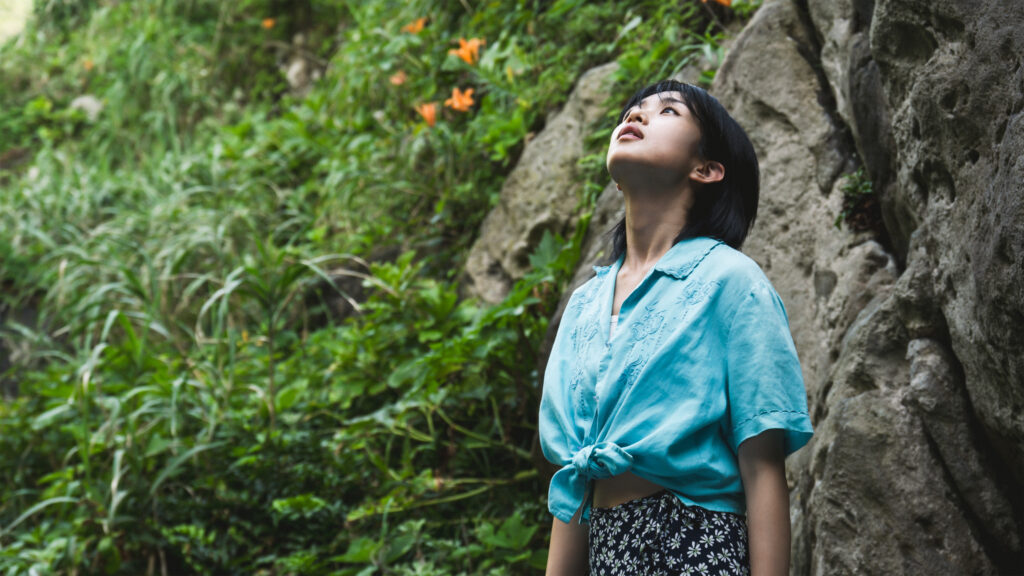
Ariana I wanted to ask about the very specific details in the film. Even in the very first scene, when Li is thinking about the script, she makes a gesture with her hands. Actress Yuumi Kawai’s character has a cut on her finger, which she reveals is from a sewing machine. Were there any backstories you wrote for those details? How much of those details came from the actors themselves?
映画の細かい詳細についてなんですけど、例えば、最初のシーンで、リーさんが台本を書いている時に、手でジェスチャーをしますよね。他には、河合さんのキャラクターがミシンで指に怪我をした時の包帯など。こういうディテールについては、監督は元々、各キャラクターのバックストーリーをこう成立させてから、物語の中に盛り込んでいったものなのでしょうか。それとも、例えば、各俳優、役者のそれぞれの個性だったり、性質を、こういうディテールで活かそうと思ったのでしょうか。
Sho The gesture at the beginning of the film was born from the actor’s movements. It was created through her improvisation on set.
Regarding the bandage on Yuumi Kawai’s hand — that was written into the script as backstory. I wrote it thinking it might help her performance, but I felt that if it was in the way, we didn’t need the setting and could discard it at any time. However, she beautifully took that — the fact that she couldn’t easily go into the ocean because of the injury, the sense that something was wrong or holding her back from being at 100% — and expressed it with her whole body, centered on that single bandage, and used it in her acting.
冒頭の、脚本家がこう、空で手を何かこう、動かすアクション。あれは、俳優の動きから生まれたものです。現場で即興的に生まれたものです。
それから、河合優実さんが手に包帯をしている設定は、バックストーリーとして脚本に書いていました。ただ、それがきっと彼女の演技の助けになるだろうと思って書いていて、もしそれが邪魔だったら別にそんな設定いらない、いつでも捨てられるよっていうぐらいのつもりだったんですが、見事に彼女はその、何て言うんでしょう、怪我をしているせいで海にもなかなか入れそうにないですし、なんか気になるところがある、何かが引っかかる、100%の状態ではないっていうことを本当に全身で、その指先の絆創膏一つで感じ取って、それを演技に活かしてくれたかなというふうに思います。
Ariana After watching, I actually had a theory that the film could be reversed. That the winter section could have been the beginning, and the summer script was inspired by that experience. My theory was that, because Li was close to the twin who passed away, she had received a camera from him before. And because she had lost that camera in the chaos of the snow experience, she was reluctant to take another one. I’m curious what you think about this theory?
私、見ながらちょっとセオリーが生まれたんですけど、もしかしてこの物語は本当は逆で、冬の物語が実は最初にあたことで、彼女はその知り合った、その恩人である教授にいただいたカメラを、その雪のいざこざの中で失くしてしまったことで、その後からそのもう一人の双子に出会って、それでカメラをもらっていいのかどうか動揺しているっていうふうな設定もあるのではないかなと思いました。
Sho Ah, that’s interesting and unique. That feeling of confusion — thinking, “Wait, is it reversed?” Realistically we know that the world inside a movie and the real world are clearly separate. But when I watch various movies, I have a feeling that the world inside the movie becomes part of my own experience. For example, I feel like the Earth has already been destroyed by aliens many times, and zombies have attacked many times; fictional narratives and reality are all jumbled together. I think what I was trying to achieve with this film is a sense that these stories aren’t just in opposition, but are somewhat mixed together.
ああ、でも、面白い、ユニークだと思います。その混乱する感じ。「もしかして逆なの?」っていうふうに。普段こうやって生きてると、映画の中の世界とこの現実の世界ってぱっきり分かれている。現実的には分かれているんですが、でもいろんな映画見ていくと、なんか映画の中の世界も自分の経験のような感覚が僕は、あるんですね。
僕の経験においては、もう地球は何度も宇宙人に滅ぼされていると思ってますし、何度もゾンビが襲来していると思っているくらい、何かごちゃごちゃになっている。まあ今のが少し関係あるか分かりませんけれど、何かそういう、映画と僕たちの人生の関係っていうものがどういう関係にあるのか。それは単に対立してるんじゃなくて、何か少し混ざり合っているような感覚っていうことが、この映画で達成しようとしていることかなっていうふうに自分は考えています。
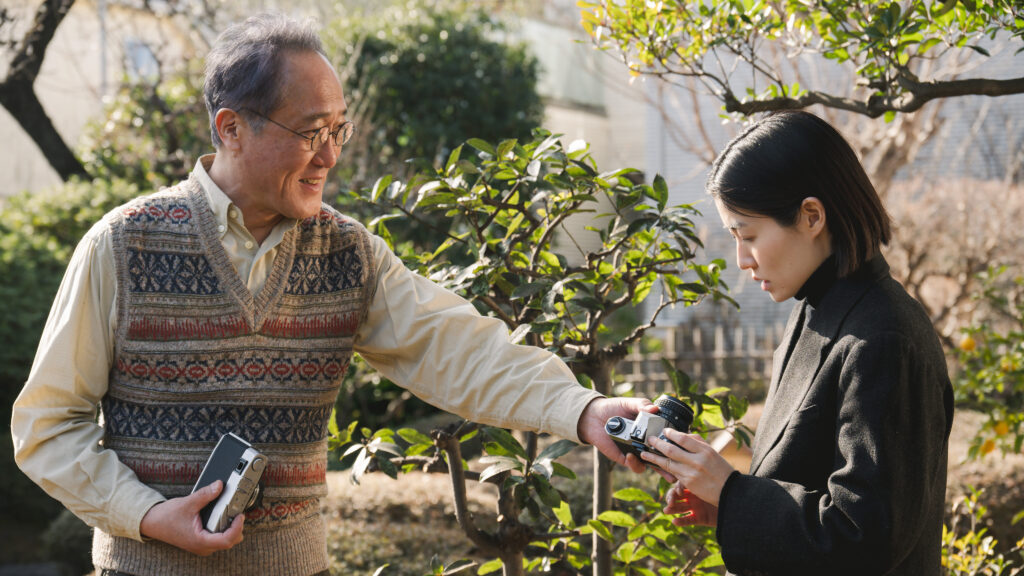
Ariana There’s also a camera in each section of the film. What does the motif of the camera represent?
カメラというモチーフも現れますね。どういう意味でしょうか。
Sho When a camera appears in a movie, it usually feels like an incredibly important motif. I feel that way too when I watch films. However, in this movie, I treated it almost like a bit of a joke. I think I included the camera so much specifically to say that the camera is not the truly important thing. After discarding the camera, what then do we see? What are we able to experience? To repeat myself, the message is not at all about trying to see the world through a camera; I was thinking that what comes after that is more important.
映画の中にカメラが出てくると、大抵ものすごく重要なモチーフのように感じます。僕もいろんな映画見てるとそう感じます。ただ、今回の映画では、少しそれを、ちょっとだけジョークのように扱うというか。本当に重要なものはカメラではない、ということを言いたいがためにカメラをたくさん出したかなというふうに思います。カメラを捨て去った後に、じゃあ何を見るのか。何を僕たちは経験できるのかっていう、何て言うんでしょうね。繰り返しになりますが、カメラで世界を見ようということがメッセージでは全然なくて、その後のほうがより重要だということを考えていました。
Ariana Then what would you say was the most important motif or theme in the film?
じゃあ、この映画の中で一番最も重要なテーマ、モチーフとは何ですか?
Sho That’s a very difficult question. Well, rather than difficult, I’m feeling like I don’t want to narrow it down to just one thing. But one theme is, certainly, the act of living through creating things — what place art and creative activities hold in one’s life. That is a truly massive theme.
To speak on a slightly smaller scale, it’s about “capturing the wind.” In both the summer and winter segments, a concrete theme for us — and specifically for the filming crew — was how to use the camera to feel and see the invisible force of the wind.
すごい難しい質問ですね。難しいというか、一つに絞りたくない気持ちが今自分の中で湧いているんですが、一つはものを作って生きていくこと。人生において芸術、創作活動っていうものがどういう位置にあるのかっていうことは本当に巨大なテーマとしてあります。
もう少し小さい話で言うと、うん、風を撮ること。夏編も冬においても、風、風という、まあ、目には見えないものをどうカメラで、あの、感じて見ていくかっていうことが、自分たちの、まあ、これは撮影チームにとってはテーマの一つ、具体的、本当具体的具体的なテーマの一つだったかなと思います。
Ariana Grabbing the wind?
風邪を取ること?
Sho No, filming the wind. Recording it.
This was my first time filming a movie based on a manga. Originally, I was against the idea. Since they are both visual arts, I felt it was very difficult and wondered why we had to go out of our way to turn a manga into a movie. However, when considering the difference between manga and film — or photography and film — I thought that if we could “film the wind,” that would be something difficult to express in manga or photos. Only in film can you capture the slight swaying of trees, the movement of clothes, or the way snow falls at an angle rather than straight down.
I felt that capturing those tiny movements would provide a reason to adapt a manga into a film. In this movie, I intentionally filmed moments that feel stopped, as if they were a photograph or a manga. But when the cut changes, suddenly, a movement is born. If the audience can feel a sense of wonder at that tiny movement and think, “Wow, movies really are interesting” — that is the experience I’m aiming for.
いや、もう具体的に。風を撮る。撮影する。
なんて言うんでしょう。今回漫画を原作にした映画を撮るっていうのは自分にとって初めてだったんですね。元々は反対でした。同じ視覚芸術なので、何でわざわざ漫画を映画にしなきゃいけないのか、すごく難しいというふうに感じていました。ただ、じゃあ漫画と映画の違いは何かっ。あるいは写真と映画の違いは何かっ。ていう時に、こう、風を撮れたら、それはなかなか漫画や写真では風を表現するってことは難しいんじゃないか。映画だからこそ、その、ほんの少しの木の揺れとか、服の揺れとか、あるいは雪が真っ直ぐ降るんじゃなくて少し傾いて降るとか、いろんな風、表現あると思うんですが、そういう本当に小さな動きを捉えるっていうことが、わざわざ漫画を映画化する理由になるだろうなと思ったので。
この映画ではわざとストップしているような、まるで写真や漫画のようにストップしているような時間も撮ったし、でもカットが変わった時に、ふと、こう、何か動きが生まれる。で、その小さな動きに、わぁって驚くことができたら、「わぁ、やっぱり映画って面白いな」っていう体験になるかなっていうふうに考えてます。
Two Seasons, Two Strangers is currently playing at Metrograph in New York until May 6.