Tingying Ma, Ramona, Kozaburo, Studio Wenjüe Lu, Fey Fey Worldwide


In the Grimm stories, six brothers are turned into swans by a wicked spell, and their little sister must sew six shirts from stinging nettles to save them — a plant that burns the hands that gather it.
“For six years you must not speak or laugh,” the brothers warn her, “and in that time you must sew together six shirts for us out of stinging nettles. If a single word falls from your lips, all your work will be lost.”
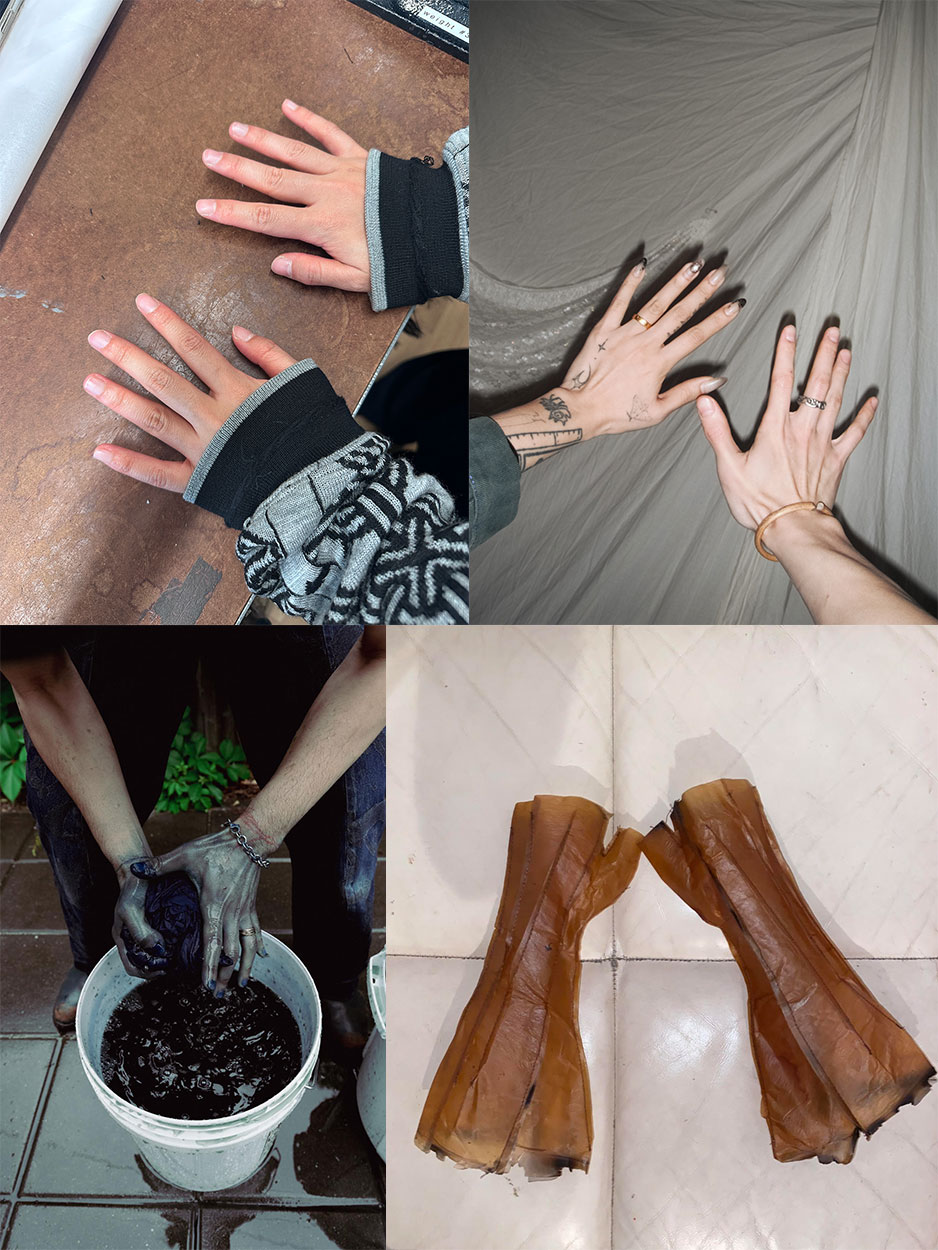
The designer’s hands
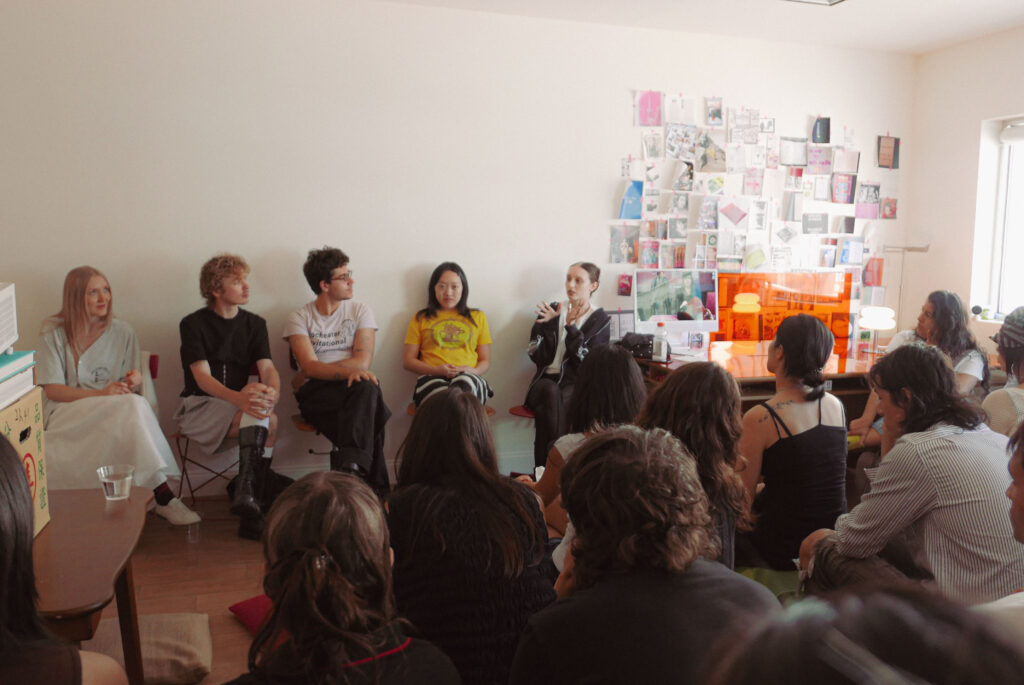
Designers Zoe Gustavia Anna Whalen, Gabe Gordon, Fey Fey and Ramona at Ying Feng’s panel discussion Mentality & Materiality: Fashion as a Language of the Mind at FAR-NEAR Studio in August 2025.
So she works in utter silence, misread by the world and condemned as a witch. On the day of her execution, she fights to finish the last stitches. One by one, the completed shirts free her brothers, and they return to human forms.
I found myself thinking about this tale while standing in my friend Ying’s hydrangea-shaded courtyard, talking with her just before she decided to step away from her life in the States — a quiet, indefinite retreat from the fashion industry, shaped by burnout. Before leaving, she had planned a panel at FAR—NEAR titled Mentality & Materiality: Fashion as a Language of the Mind, featuring independent designers who live and work in NYC.
The story kept haunting me. I began to see in it a fable not of magic, but of radical devotion — the kind that demands silence, endures misunderstanding, and finds its meaning in the sheer, sustained act of making. It was with this lens that I attended the event. In the work and conversations of Wenjüe Lu, Feyfey, Ramona and Kozaburo, I found the tale’s living echo.
The Exile
She went away and came to a wild forest, and there she climbed up into a hollow tree and lived there. She wanted to free her brothers, but she had no one to talk to, and she knew that she must not utter a word for six years, nor laugh, for if she did, all her efforts would be lost.
![[image] - 9157540](https://far-near.media/wp-content/uploads/2026/02/image-9157540-1024x1280.jpeg)
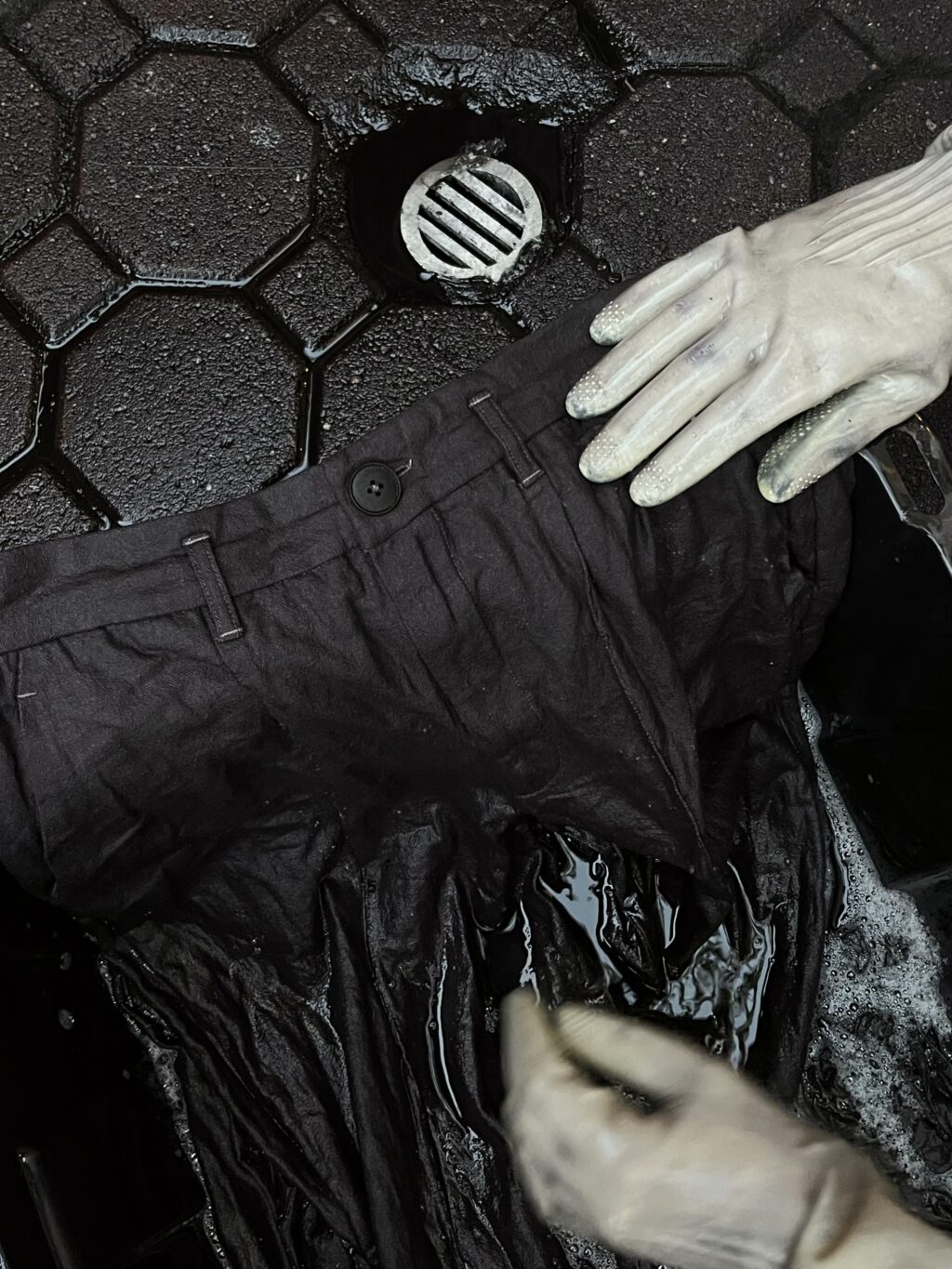
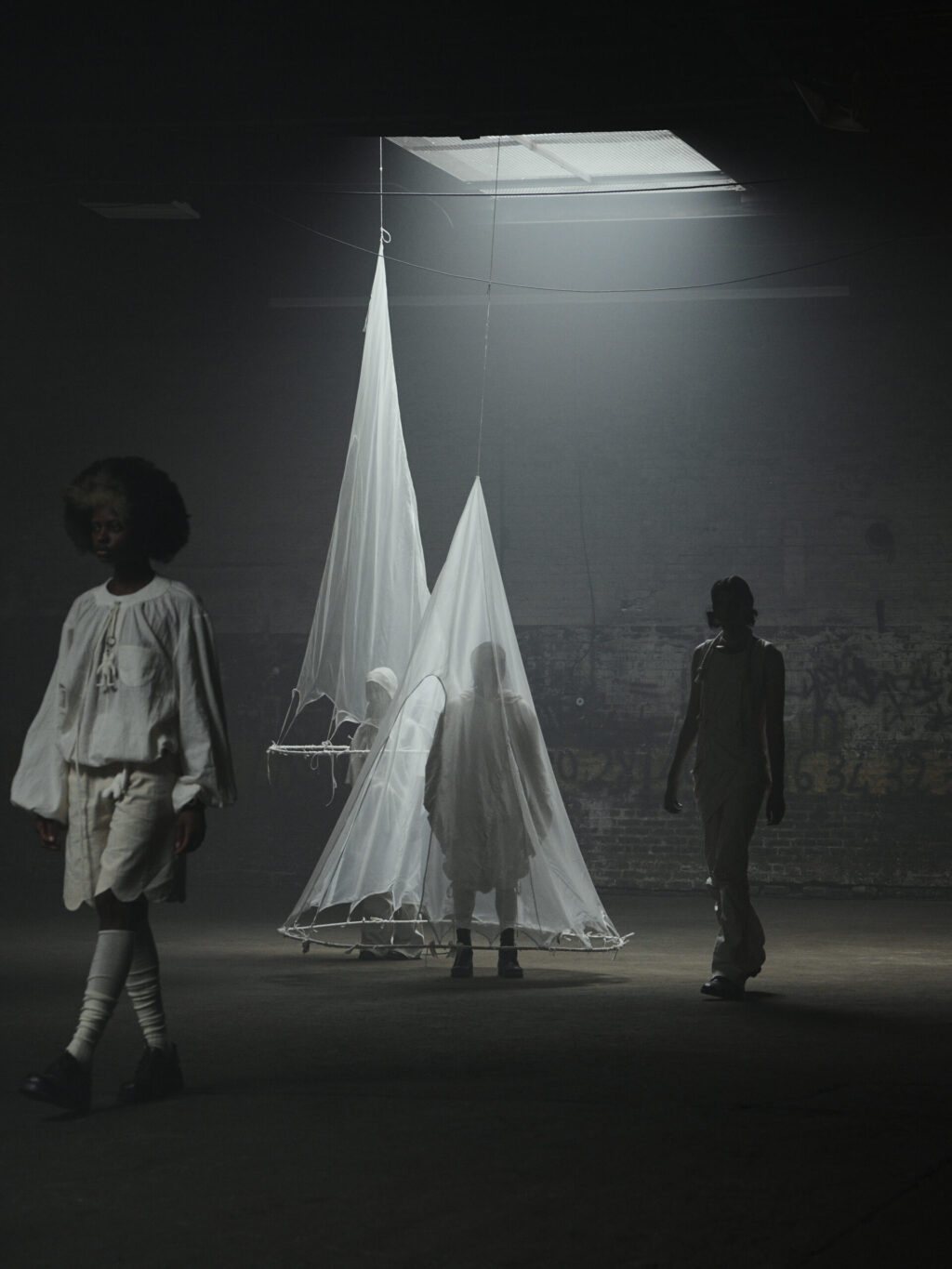
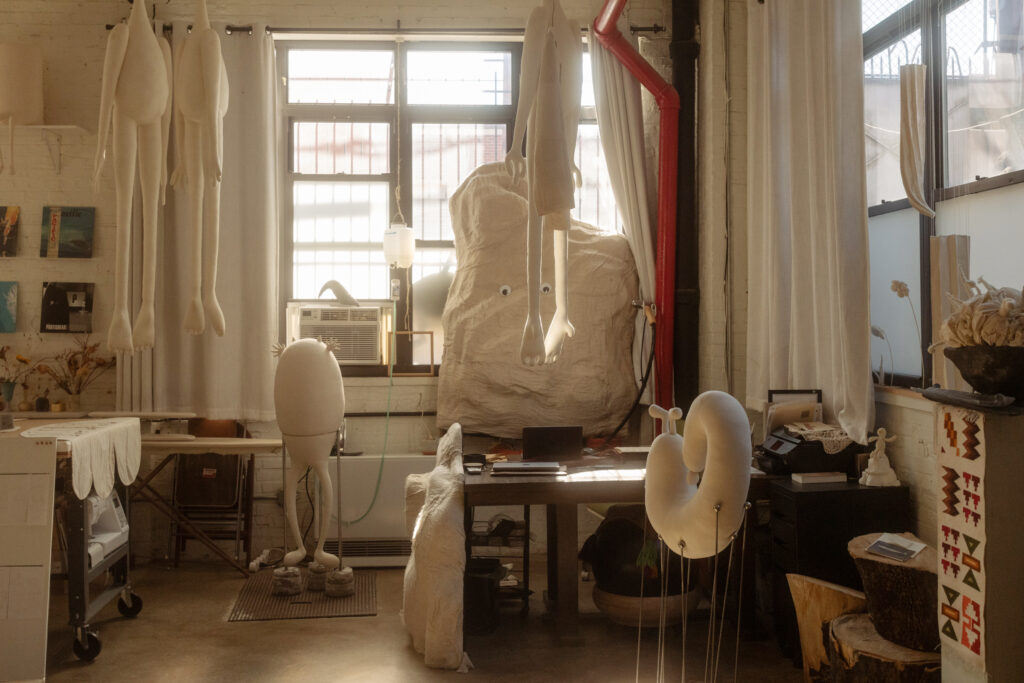
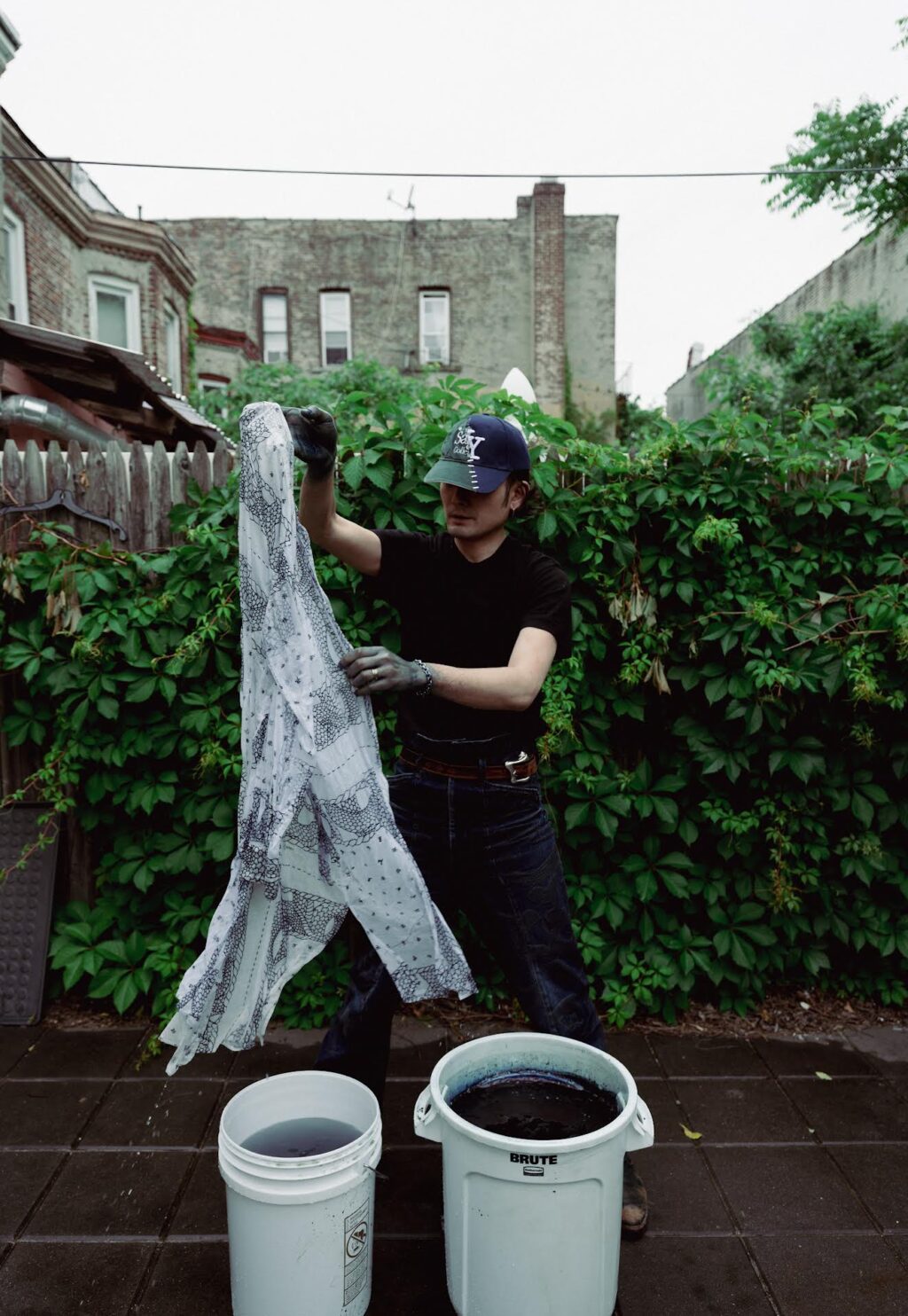
Wenjüe Lu is the name of a studio run by two people. Both went through a mental exodus from the idealism of schools during the global pandemic — Wenjue from Parsons, Chufeng from NYU — leaving them without a reliable support system in a directionless world of disorder. Being forced to stay indoors, they founded the studio as an experiment in minimal sovereignty: a space to feel safe, a democratic partnership in which decisions are shared, and a platform to summon the courage to engage with reality. Their first creation, the Fa-fa Bag (named using the Chinese pronunciation of flower), was entirely handmade. Overnight, wholesale orders poured in, turning the humble project into an unexpected two-person sweatshop. The simple, innocent-looking flower-shaped garments caught the eye of fashion retailers like Dover Street Market and Net-A-Porter, who quickly swooped in. It was unimaginable to Wenjue and Chufeng; they felt overwhelmed and consumed by their own success in the world of attention. The scale, the speed and the way things moved provoked deep reflection and doubt. The duo swiftly turned down the production line and archived the Fa-fa series as an act of reverse engineering. Wenjue and Chufeng embodied a plain, ascetic quality, reminiscent of modern-day Amish. All the garments are made from natural materials and left uncolored — a rule they have carefully upheld. In contrast to the plain-colored garments, Studio Wenjüe Lu engages intensively with language and intermediate translation, often beginning with writing, mediation and conceptualization before moving to crafting. Their work constantly experiments with meaning, spawning mixed-media projects and gallery installations that evolve into — or deliberately venture into — ambiguous creations such as perfume making. Even today, the word “slowness” remains a core principle of the studio’s practice. The studio operates via its own system, independent of the fashion calendar. Most recently, they began naturally dyeing their first archived series. Each step forward is accompanied by a revisitation of earlier work, gaining autonomy through retrospection. They remain loyal to their self-imposed exile from the capital-driven mode of production as a form of resistance, demonstrating resilience by building community and practicing sustainability. This devotion brings to mind the radical endurance of Tehching Hsieh’s One Year Performances, in which the artist subjected himself to year-long ordeals — living in a cage, or punching a time clock every hour — to sculpt the raw passage of time into a stark, lived grammar of existence. Similarly, Wenjue and Chufeng engage in a quiet, self-determined practice where the repetitive act of making, revisiting and refining becomes their own form of durational art — a resistance forged not in grand gestures, but in the cumulative weight of countless, patient days.
The Patient Witch
Her hands bled from gathering the stinging nettles. Yet, as she wove, a transformation occurred: the harsh fibers softened under her touch, becoming a cloth as tender as breath. She neither spoke nor laughed for six years, and because of her silence the people began to fear her. No matter what they did to provoke her, she said nothing—only looked back at them quietly. Her stillness enraged them, and so they called her a witch.
![[image] - 777397](https://far-near.media/wp-content/uploads/2026/02/image-777397-1024x1365.jpeg)
![[image] - 2843013](https://far-near.media/wp-content/uploads/2026/02/image-2843013-1024x1280.jpeg)
![[image] - 7585987](https://far-near.media/wp-content/uploads/2026/02/image-7585987-1024x1277.jpeg)
Yufei Liu chose the name “Feyfey Worldwide” after noticing that girls from different countries shared a similarly pronounced nickname — “fey-fey” — spelled differently, but sounding the same across languages. She often brings up this little fun fact about her branding to disarm listeners and make them laugh, as if the brand, the design, and the work she carries were simply light-hearted. Soon, people began to call her Feyfey — a name she’d just adopted. Her approach reveals the influence of the Situationist International. Her early works were more research-based, almost academically brewed, with Guy Debord’s spectra speaking through: “society as spectacle, public actions as performance.” Living and working between countries — born in China, currently in the U.S., previously in the U.K. — Feyfey has experienced a prolonged sense of non-belonging. This perspective allowed her to deconstruct culture with an outside eye. Her early inflatable series “slowly but surely take up space” drew press attention for their urban hacking and disruptive qualities. Today, she focuses more carefully on the construction of her garments, emphasizing intention and craft.
Feyfey seemed frustrated because she feels she hasn’t seen much of a shift in the fashion world’s depiction of women — still the same sexy, young, delightful “pretty girl” prototypes. She wondered whether other female characters could exist and set out to be a couturier who makes women look and feel differently. But she admits the effort failed. In response, she made herself a shirt that read “Fashion Designer” — a self-parody turned remedy. Feyfey is always navigating the aftermath of certain unspeakable failures, invisible to others. Her seriousness is often dismissed as exotic or eerie. For her SS24 collection, she premiered SHOWTIME, a mockumentary-style film capturing her attempts — and failures — to run a runway show. Feyfey has never had a runway show. She often forgets what she said in past interviews and has learned to enjoy being misinterpreted. She studies others’ interpretations of her, perhaps to get under their skin. She speaks little about her diligence, or aspirations, yet her persistence can be felt beneath the soft, shifting surface of the brand’s images. Feyfey’s designs may seem random, unintentional and playful. They are made for those willing to be underestimated and to exercise patience, yet they are always crafted to disrupt — to be women that are unconforming.
The Swan Arm
No matter how hard she worked, time ran out. As the flames rose around her, she gathered the shirts in her arms and, with her last strength, threw them toward her brothers. One by one, they turned back into their human forms — handsome, young, and alive — except for the youngest, whose sleeve was left unfinished, and one arm remained a swan’s wing. But he smiled and said softly, “It does not matter.”
![[image] - 3769465](https://far-near.media/wp-content/uploads/2026/02/image-3769465-1024x1279.jpeg)
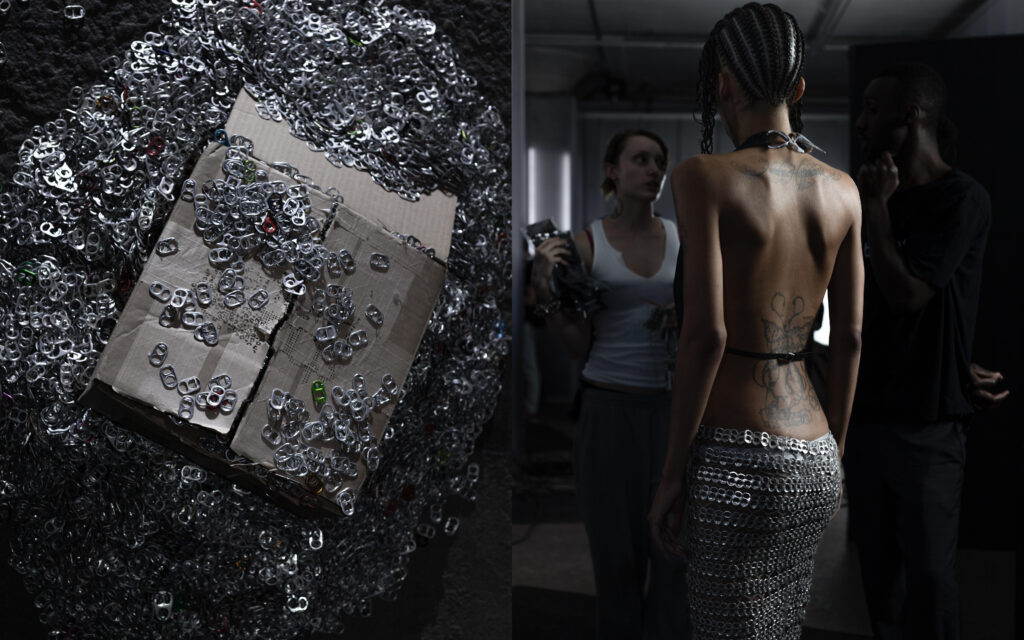
Once upon a time, Ramona started to put some of her remakes of old shirts on Instagram for sale, most of her clothes are one-offs, depending on the demand, she’d make a few more until the supply runs out. It was all transnational, and in flux — whenever she has some quick ideas, she drops them online. She cultivated a core community early on and branding or marketing were never her priorities. That changed with her knit elastic bikini, a signature piece that helped consolidate her habitual drops into a recognizable style.
I met Ramona in a half-basement on Eldridge Street, where she was hosting a pop-up with friends. Vintage clothes, music equipment, and magazines were on display — the kind of objects that circulate in niche communities, a language of mutual recognition. The pop-up came together at the last minute; she made a few pieces the day before, and the process pulled her out of a creative rut.
Ramona makes skippy clothes, clinging to the body like a second skin. To wear them is to engage in a deliberate act of exposure — a way of being seen precisely for who you are.
Her brand, Shameofficial, features a logo with a shield marked by the letters F and H. A female silhouette leans against the left side, while a rearing horse mirrors her on the right. The imagery challenges femininity under the male gaze. For Ramona, expressing sexuality is not frivolous; she rejects the idea that female sexuality exists only to serve heterosexual desire, affirming instead a power born from self-definition and defiance. Wearing clothes that are overly sexualized, if done right, can make the individual feel empowered rather than objectified. This lies at the heart of Shameofficial.
Shameofficial held a runway show in 2024. Autonomous bodies appeared in tailored, revealing garments; they wore their lashes long, hair extensions cascaded over their faces — they were desiring subjects claiming space. Ramona, through her designs, re-weaves a community for those who have been stigmatized and cast into society’s shadows, gathering them through visibility and a shared, defiant presence.
In her studio, she works with a laser cutter, a tool so finicky she often empathizes with it. A cat drifts in and out as she works. Having survived on the margins of capitalism and navigated life as a queer woman, she avoids decisions that extend beyond six months. She tracks tariffs and calculates sourcing meticulously. She creates with whatever materials she can get, discontinuing pieces when they run out. She listens carefully to her followers while her hands remain busy. In this exorbitant city, her business model resembles moss surviving in the Arctic: roots close to the ground, air circulation keeping it warm.
When asked what keeps her going, she tilts her head back, eyes staring into the ceiling. “Anger,” she says, smiling. In a fashion landscape that often perpetuates exclusion, she simply continues to create, giving visibility and agency to those who have been rendered invisible.
Six Years
The years folded into silence, yet she never stopped. When she focused on threading the needle, time seemed to disappear…
![[image] - 8049284](https://far-near.media/wp-content/uploads/2026/02/image-8049284-e1770174223959-1024x1484.jpeg)
Kozaburo answered the Zoom call just before climbing his studio stairs, his head framed at an unflattering angle against the wired, windy Bushwick sky — not that he seemed to care. Once settled before a clothing rack, the interview began. Questions about his time at St. Martins and Parsons were met with silence; the split between Tokyo and New York elicited a mere “Yes, I guess so.” When asked about his long flights, he said liked watching movies and perusing catalogues from front to back — a standard consumerist behavior. He laughed, relieved to finally have a detail to offer, then grew quiet again, as if sorry there was nothing special to say. But on the mindset shift between East and West, he gazed out the window after a long pause: “Sorry … It was a long time ago. I don’t remember.” Suspended in thought, he seemed to drift into a place language couldn’t reach. I ended the interview early — to emancipate the prolific designer from the torturous labor of “wording.”
Kozaburo Akasaka stands as a quiet anomaly. A philosophy major turned designer, he merges Japanese artisanship with Western tailoring in his label. From kanji prints to velvet shirts, his work shows he knows both America and Japan too well, constantly mediating these two worlds through his design language.
Having a bilingual website and overseas stock lists makes the brand harder to place. Perhaps it makes more sense for it to exist outside of fixed borders — just as he turned his debut show into a psychedelic happening during New York Fashion Week.
I wonder if Kozaburo, through his devoted process of cultural translation, has become an “internal outsider” in both realms: so deeply rooted in the Japanese spirit that he cannot be fully understood in America, yet so attuned to Western contexts that he observes his homeland with a critical distance. This perpetual state of in-betweenness seems to capture the essence of his solitude — a suspended existence for a sacred mission.
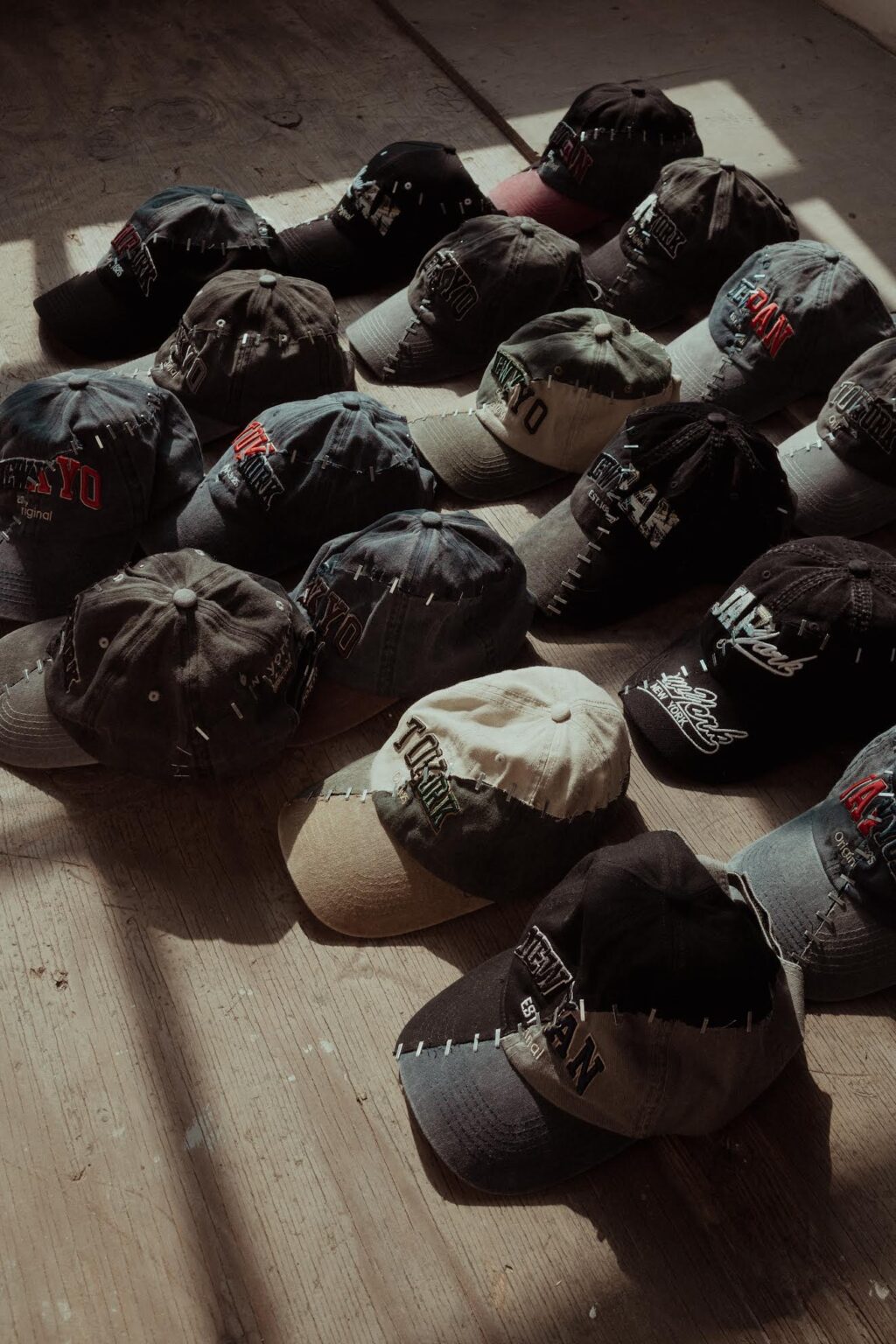
I was invited for a fitting, hoping to meet him in person. On a busy weekday afternoon, time slipped through the figures in his studio. Kozaburo and his team were making new pieces for a Halloween drop — the brand’s sideline, Phantom Ranch. They were assembling caps and hoodies with a heavy-duty stapler. From the moment I entered, he never stopped spinning around. “It’s going to be really loud,” Kozaburo said, and the machine cranked to life. I watched as he stapled pieces of fabric together, forcing two vintage hoodies into one forever-crushed union.
I felt I had stepped into a steampunk film, witnessing incredible welding procedures to fix a time machine. Kozaburo is not only good at alchemy but also at welding; old becomes new, past becomes future, to a point the linear time is undone.
His practice embodies neither a space of exile, nor a posture of resistance, nor a body of otherness — but the very medium through which redemption occurs: it is time itself, and the monastic endurance of long creative years.
And when her brothers stood before her in their human forms, the spell finally broken, she could speak again. Her first words were calm and clear, like someone returning from a long night —
Ever since I was little, I’ve believed in the dignity of silence, sacrifice, and the tests of love. The tale reminds me of those overworking themselves day and night to chase their vision. Under the relentless clock of capitalism, they seem a little otherworldly, a little reckless, holding onto a staunchness that devotes an entire lifetime to the sweetness of labor itself. I wonder what Ying will say when she returns from her open-ended journey. May the lost be found.