Jiani Wang


One almost inevitably encounters a strong sense of material presence and sensory immersion through the multimedia assemblages Xi Li creates in her latest exhibition, Cocoons of silk ready to be wound, at HESSE FLATOW in Tribeca.
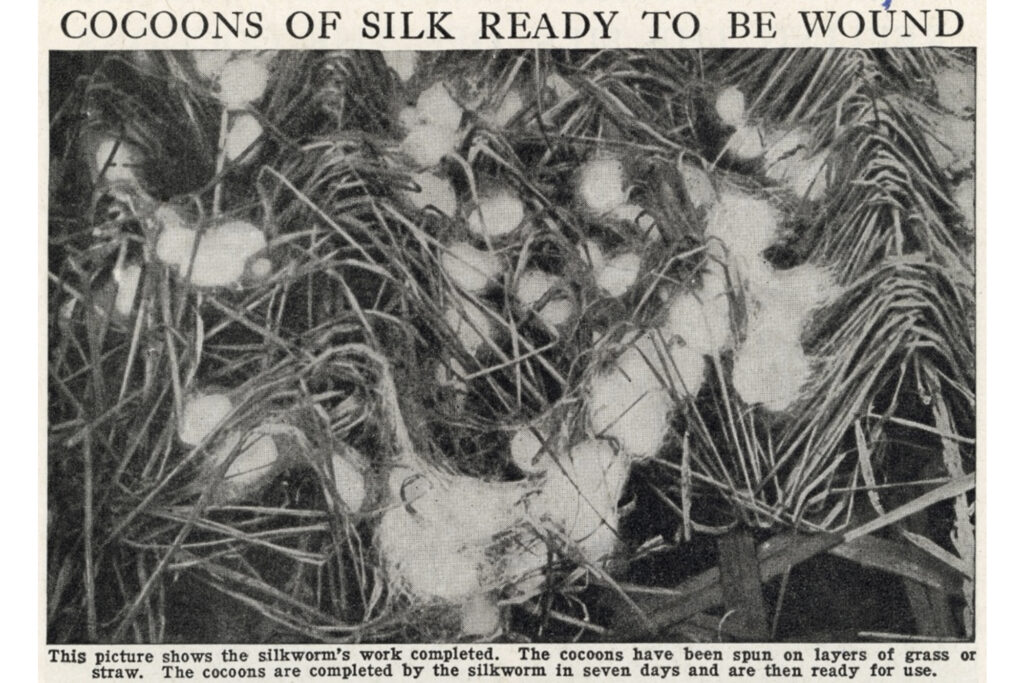
“Cocoons of Silk Ready to Be Wound”, N.Y. Public Library Picture Collection.
Stepping down to the lower ground floor of the gallery, I immediately found myself surrounded by a soft pearlescent glow emanating from the 12 works encircling me. The 12 thin rectangular boxes, framed in wood and varying in size, emitted an ivory glow through their organza surfaces and rendered the gallery walls an even colder white.
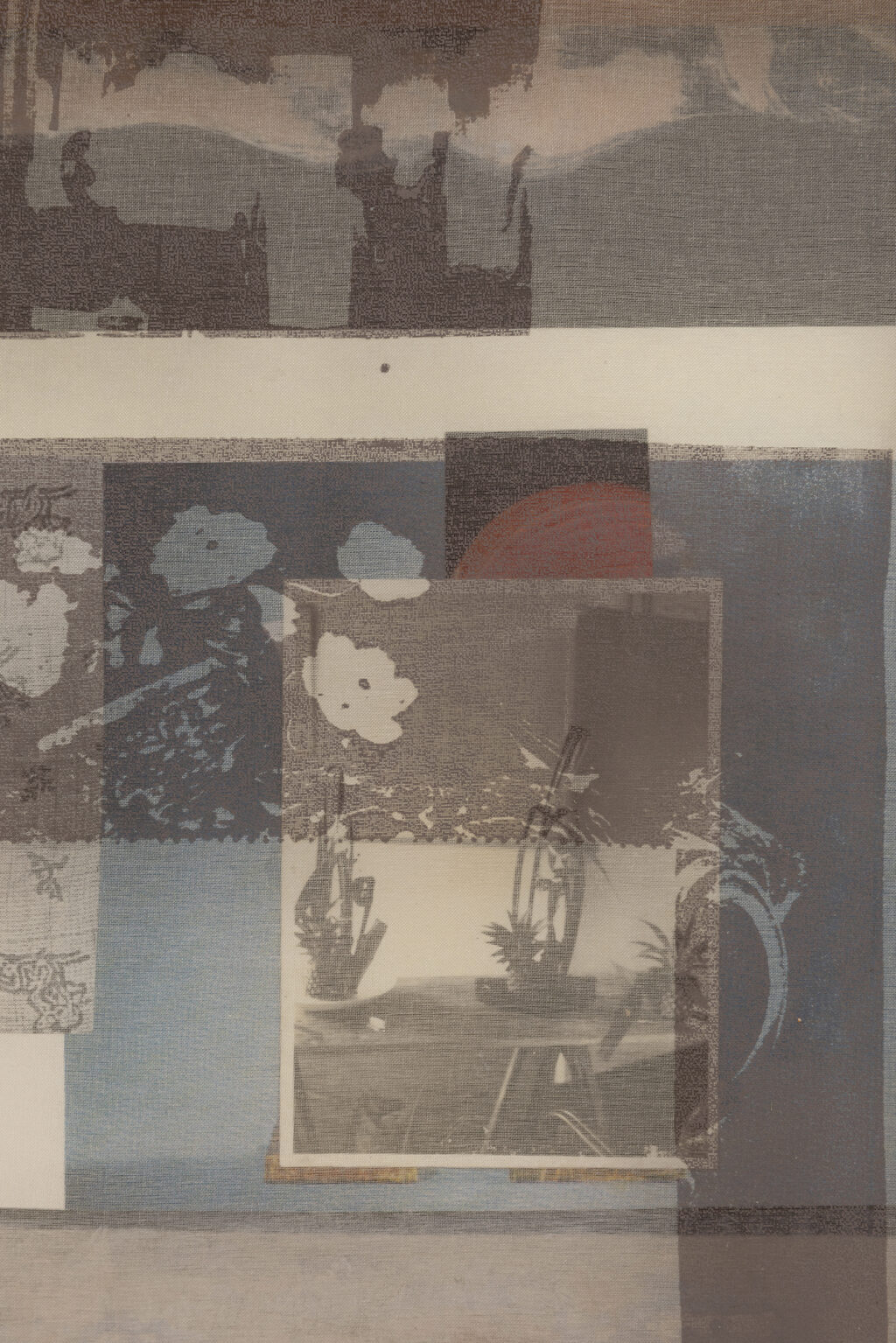
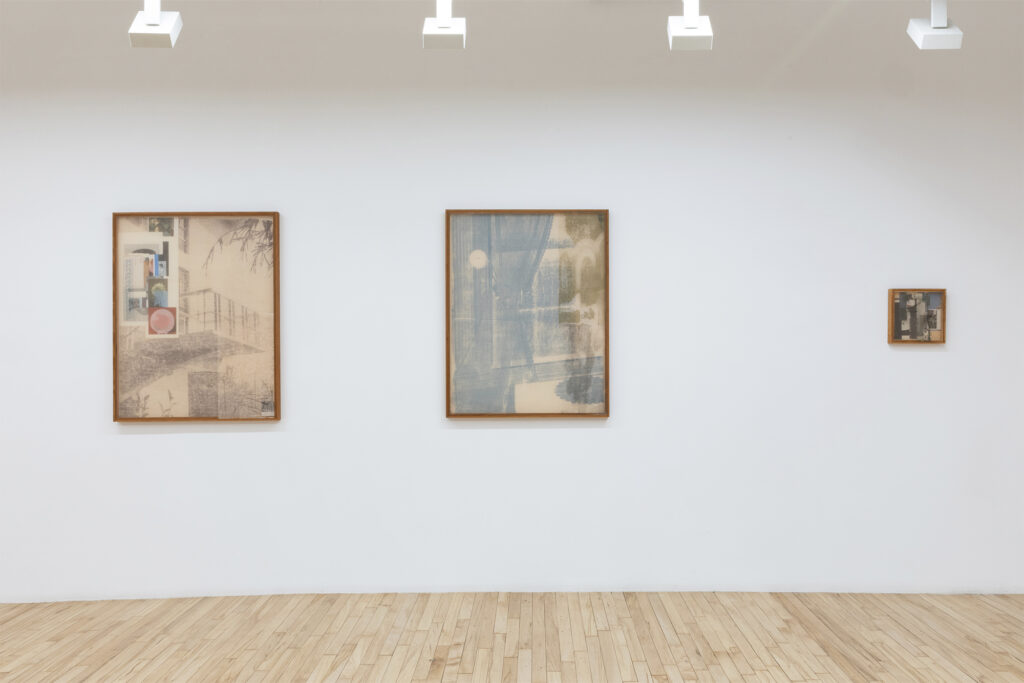
Approaching each gently glowing box at closer range, lines, dots, colors and forms began to emerge before me: glass-wrapped balcony with slender bamboo branches arching overhead; window frame overlaid with fragmented arches; scroll ornamentation juxtaposed with a shadow of a daisy, ears of wheat, and a hazy image of a gabled-roof house… Objects and images gleaned from natural and built environments and bearing different temporal and cultural imprints converged, as though intent on unfolding a novel narrative of relation and belonging.
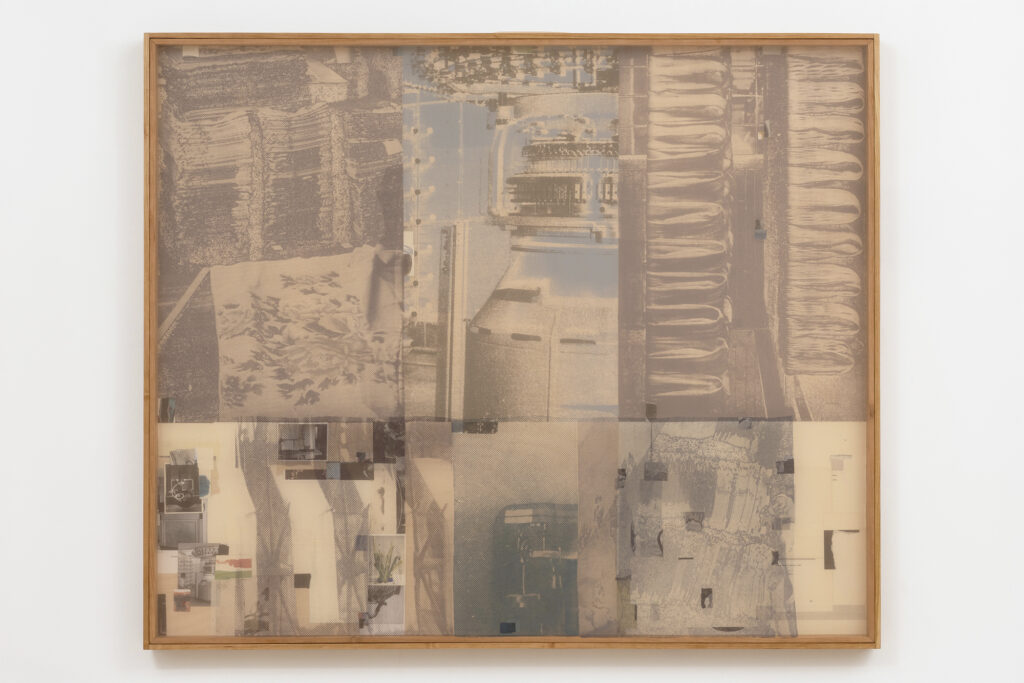
A recursive relationship between medium and motif is characteristic of Li’s work. In the largest work among the 12, Screen (Mise-en-scène), three images printed directly onto the lower half of the silk are juxtaposed with a larger image of strands of yarn cascading from hangers, screen-printed on a wooden panel. A cluster of palm-sized, black-and-white images depicting winding machines and looms is embedded beneath the silk surface in the lower left corner. Li gathers scenes of textile machinery and factory production across different times and scenarios and re-enacts them through screen printing, collage and sporadic hand-painting. Her choice to print directly onto silk and organza enters into dialogue with the textile imagery inhabiting her compositions.
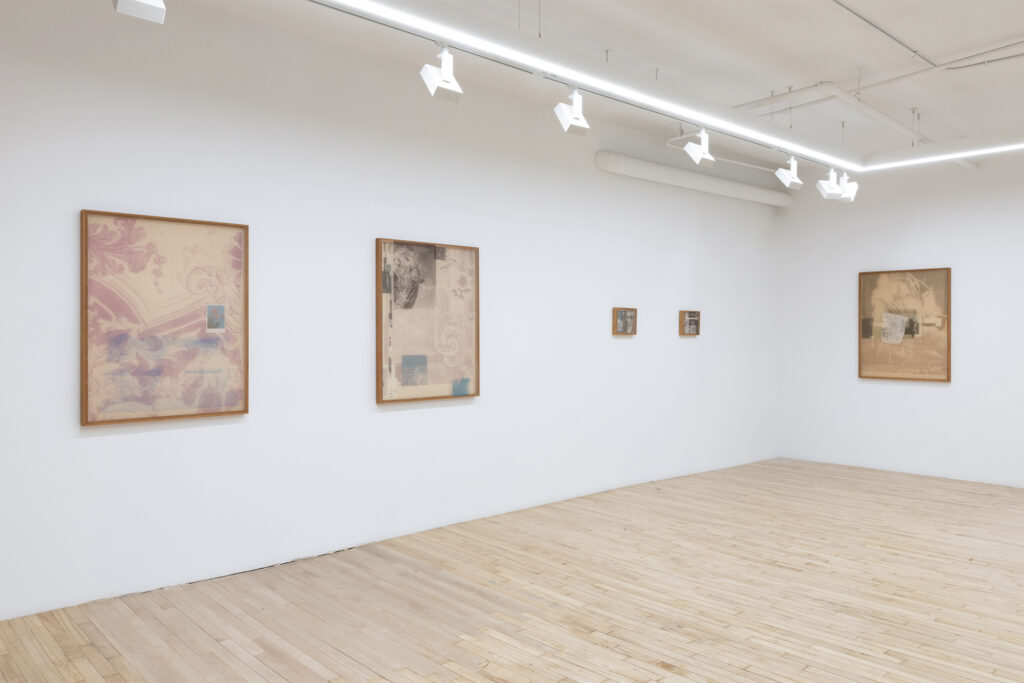
Installation Views, Xi Li, Cocoons of silk ready to be wound, 2026, HESSE FLATOW, New York. Courtesy of the artist and HESSE FLATOW, New York. Photo: Jenny Gorman
Born and raised in Suzhou — the historic southern Chinese city known for its classical gardens and Su embroidery, and influenced by Western traditions of design and material culture — Li breaks down these references into fragmented elements and, consciously or unconsciously, transplants them into her multi-layered compositions.
This exhibition marks Li’s first move beyond photography as the primary medium, opening onto a more expansive mixed-media practice that encompasses printmaking, collage and painting. In our conversation following my visit to the exhibition, she shared that this shift emerged instinctively, as the manual process of printmaking affords her a more embodied experience of image-making and a deeper intimacy with the work itself. Li’s personal shift to a more bodily engaged practice are also reflected in the subject matter and motifs that appear in her work: labor, manufacturing and craftsmanship. The cocoon in the exhibition’s title also serves as a metaphor: a silkworm spins its cocoon from within, and the silk it produces functions both as a material of self-construction and as a structure of confinement. Likewise, Li describes image-making as “a process of drawing thoughts from within while simultaneously enclosing oneself within them.”
Working almost like paper peepshows, these layered compositions invite, and simultaneously require, a slow and meticulous gaze. One first encounters the surface luminosity, then gradually notices the motifs inhabiting it, before realizing that this is not a singular flat image, but a spatial tableau composed of layered images suspended and overlapping across multiple planes.
This twisting and distortion of imagery grants the works a certain abstraction and atmospheric quality, allowing them to move beyond what they literally depict and enter a more affective terrain. Once displaced from their original contexts, these architectural, industrial and natural forms seem to gather within a newly imagined sense of place.
Xi Li, Rehearsal 4, 2026. Screenprints on organza, mixed media on wood. Courtesy of the artist and HESSE FLATOW. Photo: Jenny Gorman
In Orhan Pamuk’s memoir, Istanbul: Memories and the City, he introduces the Turkish term hüzün as a collective melancholy tied to scenes, narratives, histories and memories that linger yet are no longer held onto. As he reflects, “To feel this hüzün is to see the scenes, evoke the memories, in which the city itself becomes the very illustration, the very essence, of hüzün.”
Pamuk even describes the sensual atmosphere through which hüzün emerges within him: “Offering no clarity, veiling reality instead, hüzün brings us comfort, softening the view like the condensation on a window when a teakettle has been spouting steam on a winter’s day…As I shape words and figures on the steamy window, the hüzün inside me dissipates…”
The haziness emanating from Li’s collage prints evokes a comparable sense of hüzün. The translucent and ambivalent appearances of motifs upon the silk surfaces alongside the gaps and blank spaces between layers create a liminal space in which material traces remain anchored, while fleeting memories and associations drift through. What remains solid are the material fragments themselves, and perhaps the affective charge they carry.
Those motifs, culled from vintage magazines and prints and drawn from textiles, graphics and ornamental forms, resemble the residual memories of former Constantinople in Pamuk’s writing. Freed from the contexts to which they once belonged, they embark upon new, diasporic journeys across time, geography and cultural memory. In this suspended state, cocoons of silk become ready to be wound.
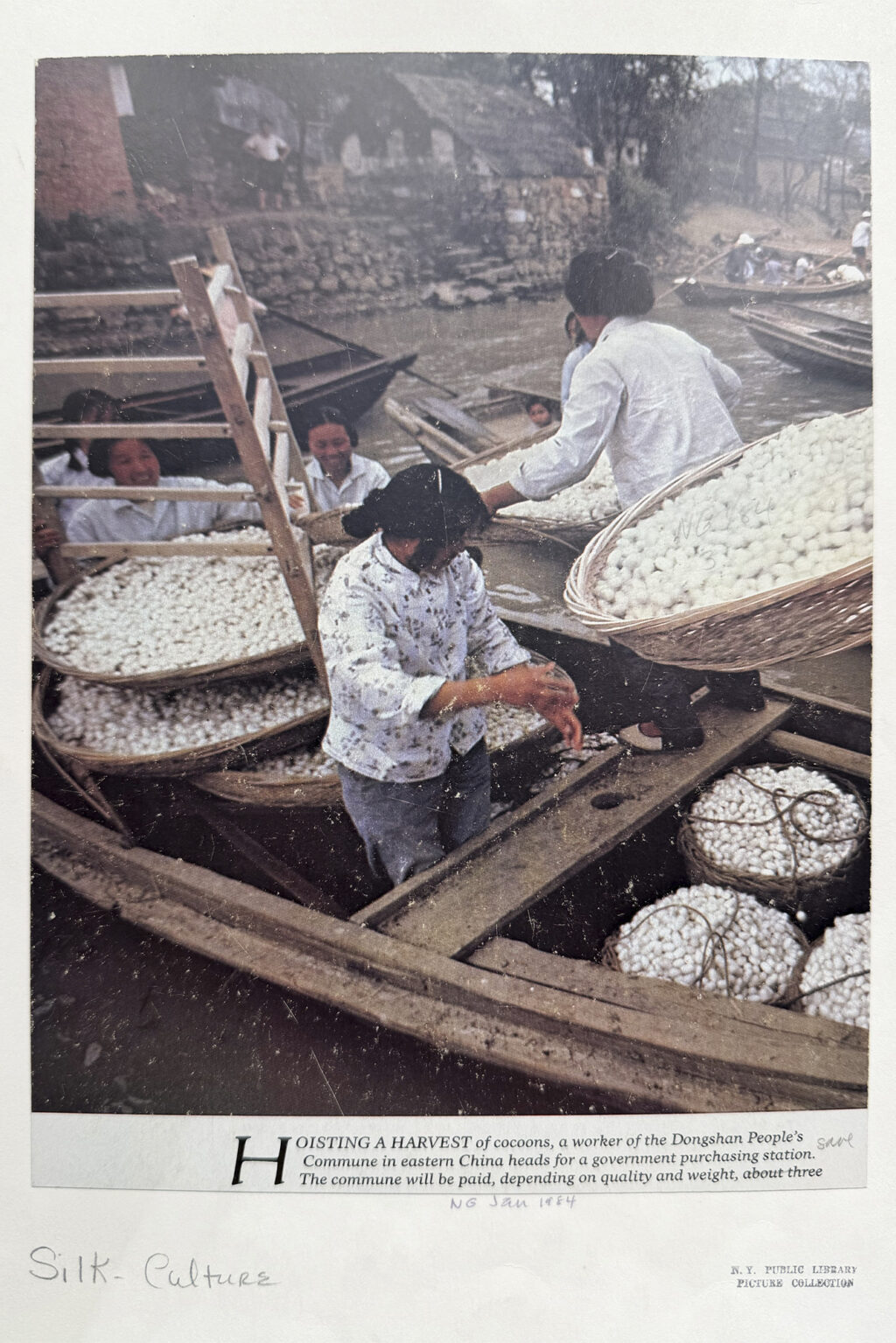
Silk Culture: Workers ferry baskets of silkworm cocoons along a waterway at the Dongshan People’s Commune, eastern China, 1984. N.Y. Public Library Picture Collection.
Cocoons of silk ready to be wound was on view at HESSE FLATOW from April 24 – May 30, 2026.